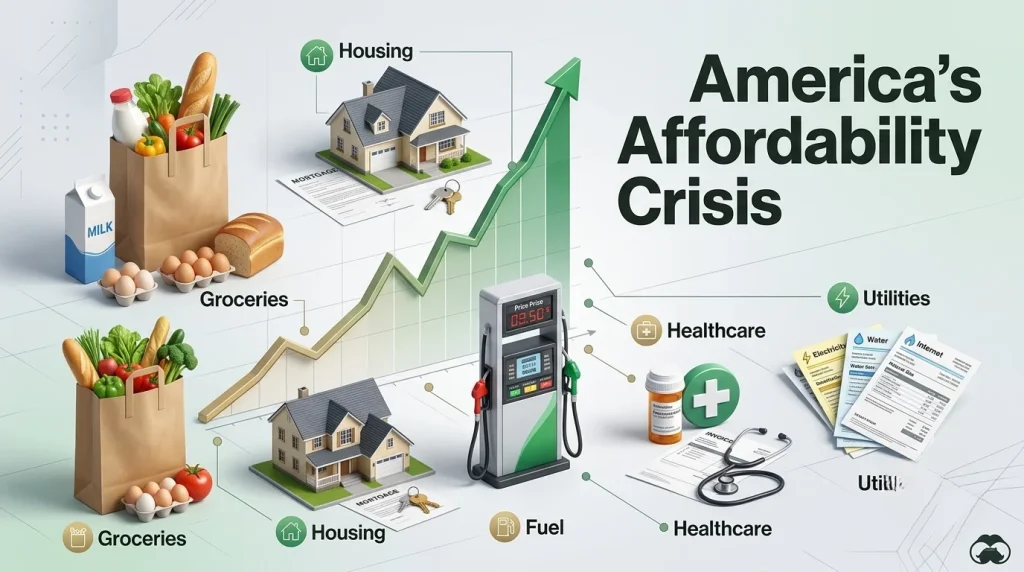
America’s Affordability Crisis has become one of the defining financial challenges for households in 2026. Although wages have increased in some industries, they have struggled to keep pace with the cost of living in America, leaving millions of families under growing financial pressure. Rising prices for housing, groceries, healthcare, transportation, and insurance continue to stretch household budgets, making it increasingly difficult to maintain the same standard of living.
Whether you’re trying to reduce monthly expenses, improve your family budgeting, or prepare for unexpected costs, understanding the causes of this affordability crisis is the first step toward making informed financial decisions.
In this guide, you’ll discover why America’s Affordability Crisis continues to impact millions of households and learn practical strategies families are using to regain control of their finances in 2026.
What Is America’s Affordability Crisis?
America’s Affordability Crisis refers to the growing gap between household incomes and the rapidly increasing cost of living. While many workers have seen modest wage growth over the past few years, the prices of essential goods and services have risen much faster. As a result, millions of Americans are finding it more difficult to afford everyday necessities without making significant adjustments to their spending habits.
Persistent inflation has played a significant role in this affordability challenge. Although inflation has slowed compared to its peak in previous years, prices have generally remained high rather than returning to pre-pandemic levels. This means families are still paying substantially more for the same products and services they purchased only a few years ago.
These rising household expenses have forced many Americans to rethink their family budget, prioritize essential spending, postpone discretionary purchases, and search for new ways to stretch every dollar. Instead of relying solely on higher incomes, families are increasingly focusing on smarter budgeting, reducing unnecessary costs, and building greater financial resilience.
Understanding what drives America’s Affordability Crisis is essential because it helps households make better financial decisions and adapt to an economy where careful planning has become more important than ever.
Why Is the Cost of Living Still Rising in 2026?
Although inflation has eased from its peak, the cost of living in America remains significantly higher than it was just a few years ago. According to the U.S. Bureau of Labor Statistics, consumer prices are still well above pre-2020 levels, meaning families continue to pay more for everyday essentials even as inflation slows. According to Al Jazeera Increasing Affordability Crisis increased a lot.
Housing remains the biggest financial burden for many households. The median home price in the U.S. is above $420,000, while elevated mortgage rates have pushed monthly housing costs beyond what many first-time buyers can comfortably afford. Rising rents are also adding to the financial pressure.
Grocery bills continue to stretch family budgets. Although food inflation has moderated, the average American household still spends thousands of dollars annually on groceries, with staple items such as eggs, dairy, meat, and fresh produce remaining noticeably more expensive than before the pandemic.
Healthcare, insurance, and utility costs are climbing as well. Auto insurance premiums have increased by double-digit percentages in many states, while higher electricity, natural gas, and childcare expenses are leaving families with less disposable income each month.
Higher interest rates are another major challenge. Whether financing a home, purchasing a vehicle, or carrying credit card balances, Americans are paying significantly more in interest than they did a few years ago. As borrowing becomes more expensive, household budgeting has become essential for managing rising living costs and protecting long-term financial stability.
Rather than waiting for prices to fall, families are responding with smarter budgeting, reducing unnecessary everyday expenses, and adopting practical financial habits that can withstand America’s Affordability Crisis.
7 Smart Ways Families Are Cutting Expenses During America’s Affordability Crisis
The ongoing America’s Affordability Crisis has changed the way millions of families manage their money. With rising household expenses, higher interest rates, and increasing grocery bills, many Americans are focusing on smarter financial habits instead of making drastic lifestyle changes. The seven practical strategies below can help you reduce monthly expenses, strengthen your family budget, and build long-term financial stability.
1. Build a Budget and Track Every Dollar
A clear budget is the foundation of good financial planning. Many families now use a zero-based budget, giving every dollar a purpose before the month begins. Tracking daily spending also helps identify unnecessary expenses and keeps financial goals on track.
Pro Tip: You can see our To see Best Budgeting APPS in America
2. Reduce Food and Grocery Costs
Food is one of the largest household expenses. Families are saving money by cooking at home, planning meals in advance, buying store-brand products, and using coupons or cash-back apps. These small changes can save hundreds of dollars each month without sacrificing quality.
Pro Tip: Never shop for groceries without a list—it helps avoid impulse purchases.
3. Cut Unnecessary Monthly Expenses
Many households are reviewing subscriptions, memberships, and other recurring payments they rarely use. Canceling unused services, delaying non-essential purchases, and negotiating internet or phone bills can quickly free up extra cash.
Pro Tip: Review your bank statements every three months to spot forgotten subscriptions.
4. Lower Housing, Utility, and Transportation Costs
Housing, utilities, and transportation consume a large share of most family budgets. Families are reducing costs by using energy-efficient appliances, adjusting thermostats, combining errands, carpooling, or using public transportation whenever possible.
Pro Tip: Even replacing old light bulbs with LEDs can lower annual electricity costs.
5. Pay Down Debt and Compare Insurance
High-interest debt makes it harder to stay ahead financially. Paying extra toward credit card balances while comparing auto, home, and health insurance quotes each year helps reduce monthly expenses and improve overall financial security.
Related Reading: Debt Snowball vs. Debt Avalanche: Which Debt Payoff Plan Works Best?
6. Increase Your Income with a Side Hustle
Cutting expenses has limits, but increasing income creates more financial flexibility. Many Americans are earning extra money through freelancing, online businesses, tutoring, consulting, or part-time work to keep up with the cost of living crisis.
Related Reading: Top 10 Side Hustles to Earn $1,000/Month in 2026
7. Build an Emergency Fund for Unexpected Expenses
Unexpected bills can quickly disrupt a household budget. Setting aside a small amount from every paycheck helps build an emergency fund, reducing reliance on credit cards and providing peace of mind during financial emergencies.
Pro Tip: Aim to save at least three to six months’ worth of essential living expenses over time
Families facing America’s Affordability Crisis are discovering that financial success comes from consistent habits rather than extreme sacrifices. By following these seven budgeting tips for families, reducing unnecessary spending, and increasing income where possible, you can create a stronger financial future—even in a challenging economy.

How to Build a Budget That Survives America’s Affordability Crisis
A strong monthly budget should be flexible enough to adapt as prices continue changing. Rather than following rigid budgeting rules, families should create a plan that reflects today’s economic realities while supporting long-term financial goals.
One popular framework is the 50/30/20 rule, which recommends allocating 50% of income to essential needs, 30% to personal wants, and 20% to savings or debt repayment. However, in high-cost areas affected by America’s Affordability Crisis, many households may need to adjust these percentages by reducing discretionary spending and prioritizing essential expenses.
Regularly tracking spending helps identify unnecessary costs before they become recurring habits. Reviewing subscriptions, insurance premiums, grocery spending, and utility bills every month ensures your cost of living budget remains realistic as prices fluctuate.
Building emergency savings should also remain a priority, even if contributions start small. Automating transfers into a savings account removes the temptation to spend first and save later.
Finally, review your budget planning every month. Financial circumstances change, and your budget should evolve with them. Small adjustments made consistently are far more effective than waiting until financial problems become overwhelming.
Final Thoughts
America’s Affordability Crisis is more than a temporary economic challenge—it’s changing how families budget, spend, and plan for the future. As the cost of living in America continues to rise, building strong financial habits has become essential rather than optional. While you can’t control inflation or interest rates, you can control how you manage your money.
The key to long-term financial stability isn’t making drastic sacrifices overnight. Instead, focus on creating a realistic budget, reducing unnecessary expenses, increasing your income when possible, and consistently growing your emergency fund. These small, intentional actions can have a significant impact on your financial future.
Remember, every dollar you save and every smart financial decision you make today brings you one step closer to greater financial freedom. Start with one strategy, stay consistent, and you’ll be better prepared to overcome America’s Affordability Crisis while building lasting wealth and financial confidence for years to come.
Frequently Asked Questions
What is America’s Affordability Crisis?
America’s Affordability Crisis refers to the growing gap between household incomes and the rising cost of essential expenses such as housing, groceries, healthcare, transportation, and insurance. Many families are finding it increasingly difficult to maintain their standard of living despite continued employment.
Why are everyday expenses increasing in the United States?
Everyday expenses continue to rise because of persistent inflation, higher production and transportation costs, elevated housing prices, increasing insurance premiums, and higher interest rates. Although inflation has slowed, prices have generally remained higher than they were several years ago.
How can families reduce their monthly living expenses?
Families can lower monthly expenses by creating a budget, cooking at home, eliminating unnecessary subscriptions, using cash-back apps, comparing insurance providers, reducing energy consumption, and tracking spending consistently.
What is the best budgeting method during high inflation?
A flexible version of the 50/30/20 budgeting rule works well during periods of high inflation. Many families adjust spending priorities by allocating more income toward essential needs while continuing to save and reduce debt whenever possible.
Is cutting expenses enough to improve financial stability?
No. While reducing expenses improves cash flow, long-term financial stability also depends on increasing income, investing consistently, building an emergency fund, and following a comprehensive financial plan that adapts to changing economic conditions.