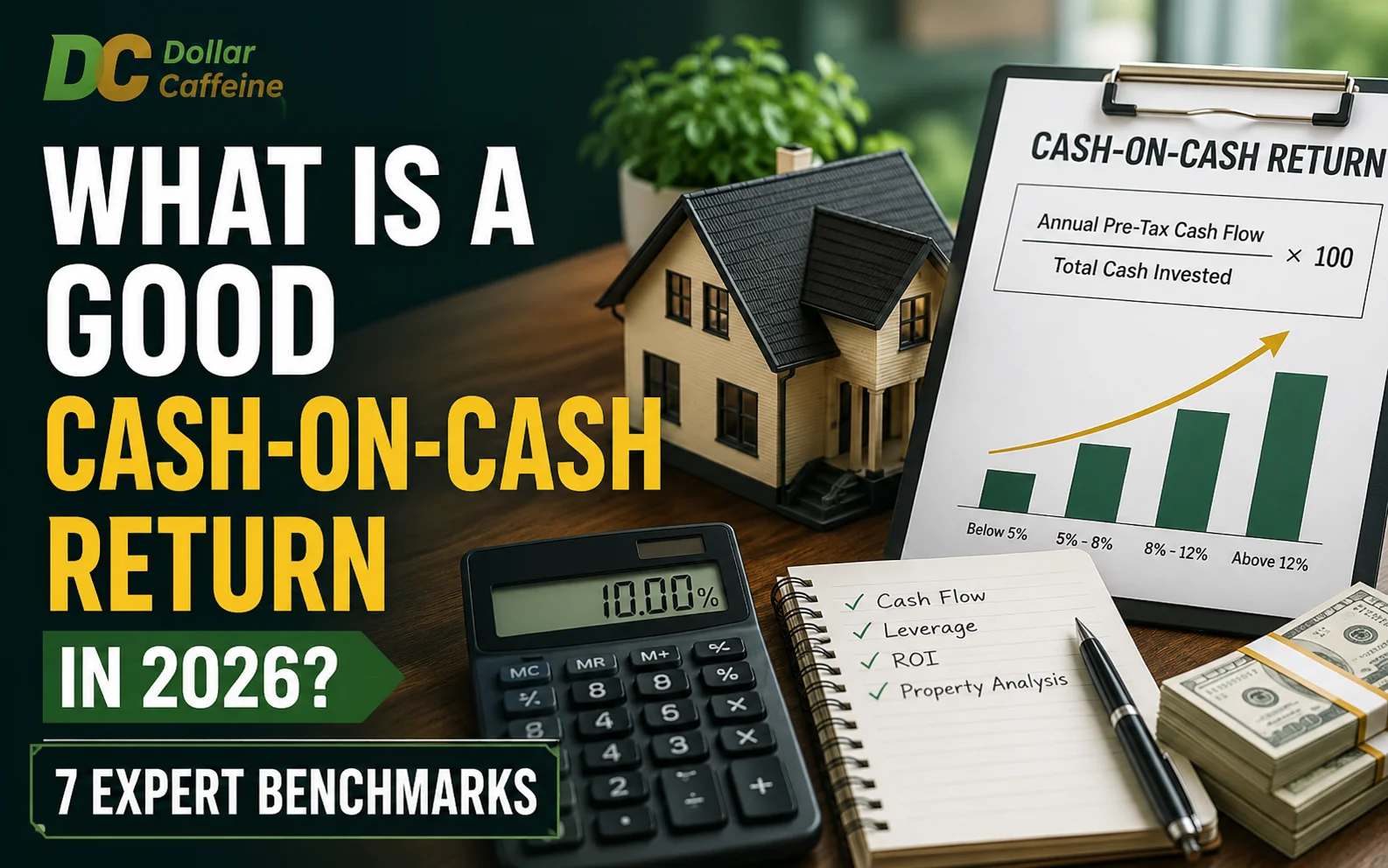
What Is a Good Cash-on-Cash Return is one of the most common questions asked by rental property investors in 2026. With higher mortgage rates and tighter cash flow margins, understanding this metric is essential for evaluating whether an investment property will generate strong long-term returns..
If you’ve ever wondered what is a good Cash-on-Cash Return, you are not alone. Whether you are purchasing your first rental property, expanding a portfolio, or evaluating a BRRRR (Buy, Rehab, Rent, Refinance, Repeat) project, understanding this metric helps you compare investment opportunities based on the actual cash you have deployed, rather than just the property’s total market value.
Unlike Return on Investment (ROI), which measures the overall profitability of an investment, Cash-on-Cash Return focuses specifically on the annual income generated from the money you have personally invested. This makes it especially valuable for US-based investors who leverage properties with mortgages. In this guide, you will learn exactly what Cash-on-Cash Return means, how to calculate it using 2026 market standards, and how to improve your returns using professional strategies.
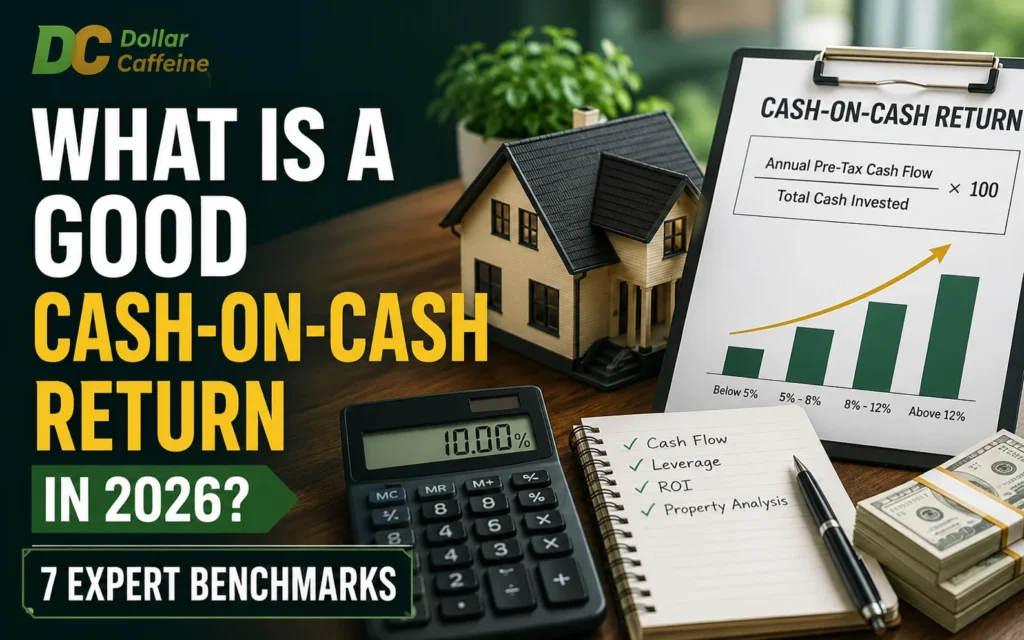
Quick Summary: Good Cash-on-Cash Return Benchmarks
| Cash-on-Cash Return | Investment Quality |
| Below 5% | Weak return; review carefully |
| 5%–8% | Acceptable in stable, high-appreciation markets |
| 8%–12% | Strong investment opportunity |
| Above 12% | Excellent, but verify your assumptions |
Quick Takeaway: Most experienced US investors currently target an 8% to 12% Cash-on-Cash Return. However, the “ideal” benchmark is deeply influenced by financing costs, property class, and local geography.
According to the US Department Of Treasury.
What Is Cash-on-Cash Return?
What Cash-on-Cash Return measures the annual pre-tax cash flow generated by a rental property compared with the total cash you invested to acquire and stabilize it.
Unlike the Capitalization Rate (Cap Rate), which completely ignores financing to look at the property as if it were an all-cash purchase, Cash-on-Cash Return reflects the actual performance of your invested capital after accounting for your mortgage payments. For investors using leverage (which is the standard for 90% of residential investors), this metric provides the only realistic picture of how effectively your liquid capital is working for you.
The Cash-on-Cash Return Formula
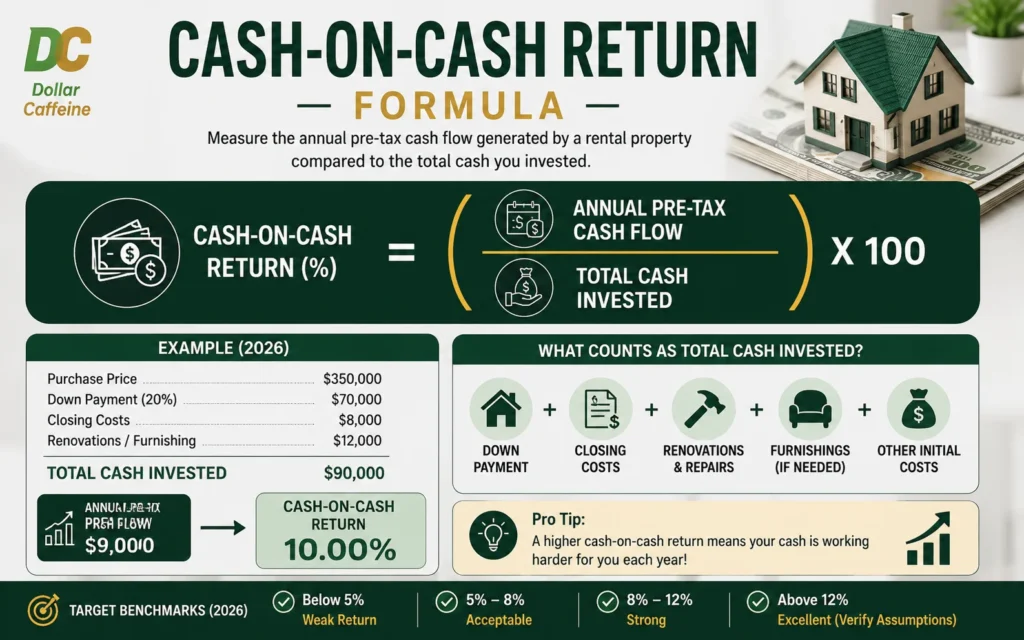
To evaluate a deal, use the industry-standard formula:
Cash-on-Cash Return = (Annual Pre-Tax Cash Flow ÷ Total Cash Invested) × 100
A Practical 2026 Example
Imagine you are underwriting a single-family rental:
- Purchase Price: $350,000
- Down Payment (20%): $70,000
- Closing Costs: $8,000
- Initial Renovations/Furnishing: $12,000
- Total Cash Invested (Denominator): $90,000
If, after calculating your annual rental income and subtracting all operating expenses—including property management, taxes, insurance, and your 6.5% mortgage debt service—you are left with $9,000 in pre-tax cash flow:
Cash-on-Cash Return = ($9,000 ÷ $90,000) × 100 = 10%
In this scenario, your capital is generating a 10% annual yield, comfortably within the “strong” benchmark range.
Why Cash-on-Cash Return Matters in 2026
The 2026 macroeconomic climate is defined by higher borrowing costs. A deal that appeared highly profitable in 2021 may produce significantly lower returns today because debt service (the interest portion of your payment) is a much larger line item.
Cash-on-Cash Return is the definitive “truth-teller” in this environment. It helps you:
- Measure Efficiency: It tells you if the property is generating enough yield to justify the risk of being a landlord.
- Compare Opportunities: You can compare a low-cost, high-cash-flow rental in the Midwest against a high-cost, high-appreciation property in a coastal market to see which actually puts more cash in your pocket.
- Account for Leverage: It highlights how your interest rate impacts your bottom line.
Analyzing the Benchmarks: What is “Good”?
There is no universal “good” number because investment goals vary. However, seasoned investors use the following nuances to interpret their data:
Below 5%: The Appreciation Play
Returns below 5% are often found in “Class A” neighborhoods or expensive coastal markets. Investors here are often betting on long-term appreciation and tax advantages (like depreciation) rather than monthly cash flow.
5%–8%: The Stable Market Target
In many stable US cities, a 5% to 8% return is considered highly acceptable. If the neighborhood has low crime, good schools, and a reliable tenant base, a lower CoC return is often viewed as a trade-off for lower operational risk and vacancy.
8%–12%: The “Sweet Spot”
This is the target for most buy-and-hold investors. Properties in this range typically balance healthy cash flow with enough equity buildup to provide a diversified portfolio.
Above 12%: The High-Risk or Value-Add Zone
While a 12%+ return looks fantastic on paper, proceed with caution. Exceptional returns often hide “gotchas” such as:
- Deferred Maintenance: The property requires immediate, expensive repairs.
- Problematic Tenants: High turnover or rent collection issues.
- Unrealistic Projections: You may be forgetting to factor in a vacancy reserve or property management fees.
Cash-on-Cash Return vs. ROI
Beginners often confuse these two, but they serve different roles in your financial planning .
- Cash-on-Cash Return: Focuses strictly on annual liquidity. It tells you: “How much cash will this put in my bank account this year?”
- ROI (Return on Investment): A broader, long-term metric. It includes appreciation, principal paydown (the equity you build as you pay off the mortgage), and tax benefits.
Pro Tip: Use CoC Return to evaluate the viability of a deal today, and Returnd use ROI to evaluate the wealth-building potential of a deal over 10 years.
How to Improve Your Cash-on-Cash Return
Every one asks What Is a Good Cash-on-Cash Return If your deal analysis shows a return that is too low, you have several levers to pull:
- Increase Rental Income: Small upgrades (e.g., adding a washer/dryer, allowing pets with a fee, or improving curb appeal) can often increase rents by 5–10%.
- Streamline Operating Expenses: Audit your insurance, property management fees, and utilities. Even a 5% reduction in expenses can increase your cash flow by hundreds of dollars annually.
- Optimize Financing: If you can secure a lower interest rate, use a government-backed program (like FHA or VA), or negotiate seller financing, you can instantly boost your CoC return.
- Buy Below Market Value: The easiest way to improve returns is to purchase the property at a discount. If you buy at $300k and it is worth $330k, your cash yield on that “hidden” equity will be much higher.
Common Mistakes to Avoid
Even professionals slip up when calculating these figures. Avoid these common traps:
- Forgetting “Hidden” Costs: Always include vacancy reserves (typically 5–8%), capital expenditures (new roof/HVAC fund), and management fees (even if you self-manage, include the cost of your time).
- Ignoring Closing Costs: Your total cash invested includes the down payment plus title fees, transfer taxes, and loan origination fees.
- Unrealistic Vacancy Estimates: Assume your property will be vacant for at least 1 month every year.
Why You Need a Rental Property Calculator
Manually calculating these metrics in a spreadsheet is prone to error and incredibly time-consuming. To make confident decisions in the 2026 market, you need a tool that handles the complex math for you.
The Dollar Caffeine Rental Property Calculator allows you to input your specific deal details—including property taxes, insurance, and financing—to instantly generate:
- Net Operating Income (NOI)
- Cash Flow Projections
- Cap Rate
- Cash-on-Cash Return
Instead of guessing, you can run dozens of scenarios in minutes. [Click here to use our professional Rental Property Calculator and analyze your next deal in seconds.]
Frequently Asked Questions (FAQ)
Q1: What is a good Cash-on-Cash Return for beginners?
Most beginners aim for 8% to 10%. This provides enough of a “buffer” if unexpected repairs arise.
Q2: Is a 10% Cash-on-Cash Return good?
Yes. In 2026, a 10% return is considered a strong benchmark that indicates the property is working efficiently for you.
Q3: Is Cash-on-Cash Return better than Cap Rate?
Neither is better; they answer different questions. Cap Rate evaluates the property, while CoC Return evaluates the investment.
Q4: Can Cash-on-Cash Return be negative?
Yes. If your annual expenses exceed your rental income, you are effectively paying to own the property, resulting in a negative CoC return.
Should I only invest in properties with high Cash-on-Cash Returns?
Not necessarily. Always weigh CoC returns against the neighborhood quality and your long-term goals. A 6% return in a rapidly appreciating neighborhood might be superior to a 12% return in a declining area.
Final Thoughts
Understanding what is a good Cash-on-Cash Return is the foundation of successful real estate investing in 2026. While an 8% to 12% return is the industry standard for a healthy, performing asset, your specific strategy should dictate your final numbers.
Don’t rely on “gut feelings” or generic advice from years past. Combine your knowledge of CoC Return with Cap Rate and long-term ROI analysis to build a robust, cash-flowing portfolio. Ready to see if your current deal stacks up? Use our [Rental Property Calculator] today to remove the guesswork and invest with clarity.
Knowing What Is a Good Cash-on-Cash Return allows you to compare investment opportunities more confidently and make smarter real estate decisions in 2026.