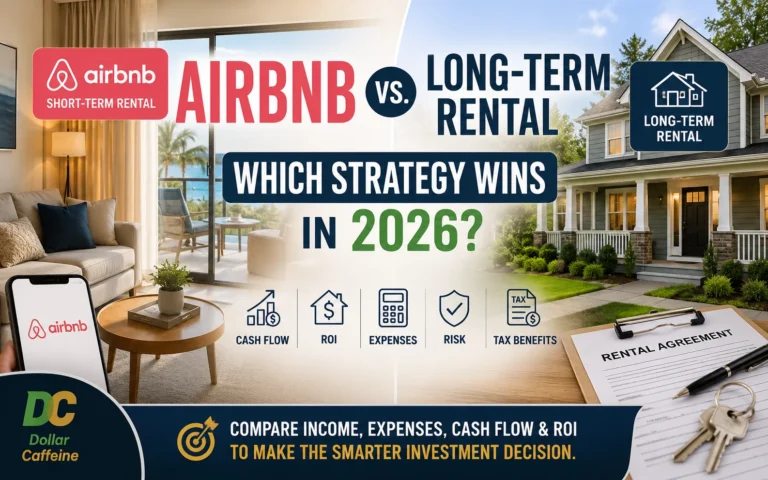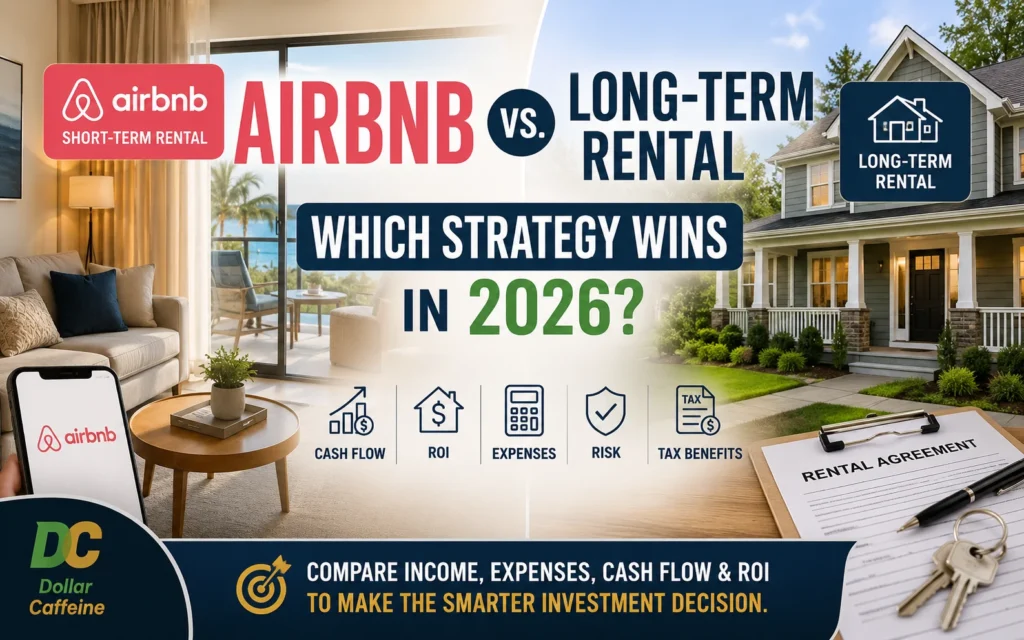
The investors entering the real estate field in 2026 have a critical choice before them: Airbnb vs long-term rentals. For a long time now, there was an established story, with Airbnb being the “get rich quick” option and long-term rentals being the “safe, slow” way to make money.
In 2026, the situation has changed, though. With interest rates on the rise (at about 6.5%), tougher city regulation, and pickier guests, the numbers behind the two options became quite different from each other.
Which investment strategy actually pays off better? The answer is to be found in the numbers.
The 2026 Investment Climate
The rental market in 2026 looks very different from the post-pandemic boom According to the IRS(Rental Income and Expenses). The “easy profit” era where any property with a nice couch could generate 100% occupancy is largely over.
- Normalization of Supply: Markets that saw explosive growth in short-term rental (STR) listings are seeing supply growth moderate. Investors are now competing in a “sharpened” market where travelers are more selective, favoring properties with professional management and distinct identity.
- Regulatory Gravity: Regulation is no longer an “episodic risk”; it is a permanent factor. From strict permitting in urban centers to HOA bans in vacation hubs, successful Airbnb hosts must treat regulatory compliance as a core operational competency.
- The Interest Rate Factor: Financing costs represent a larger percentage of your monthly outflow than in previous years. This makes accurate rental property calculator analysis mandatory. A deal that would have penciled out in 2021 might be a cash-flow drain in 2026.
Airbnb vs Long-Term Rental: The Comparison Table
| Factor | Airbnb (Short-Term) | Long-Term Rental |
| Income Potential | High (Market Dependent) | Moderate/Predictable |
| Cash Flow Stability | Moderate (Seasonal) | High (Consistent) |
| Management Required | High (Active) | Low (Passive/Managed) |
| Vacancy Risk | Higher (Fluctuates) | Lower (Stable) |
| Maintenance Costs | High (Turnovers/Wear) | Medium |
| Time Commitment | High | Low |
| Best For | Active Investors | Passive Investors |
Revenue vs. Profit: Why the Math Matters
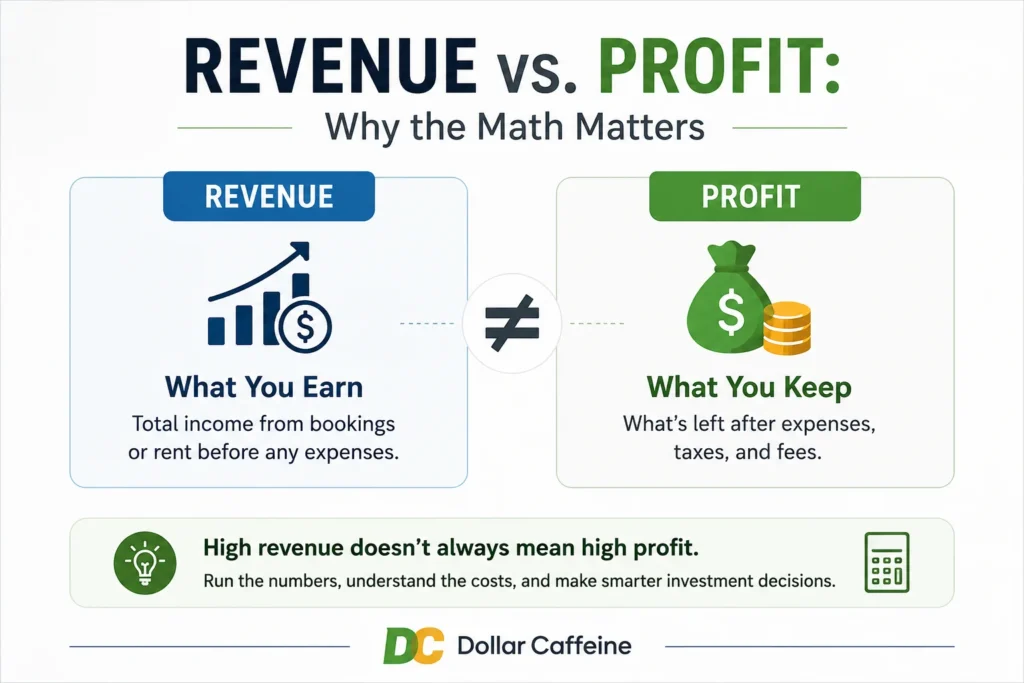
One of the most common mistakes beginner investors make is confusing Gross Revenue with Net Profit.
Consider a property that rents for $2,400/month as a long-term rental. Converted to an Airbnb, it might gross $3,800/month. On the surface, that’s a $1,400 advantage. But experienced Dollar Caffeine investors know that gross revenue is a vanity metric.
When you factor in the hidden costs of short-term rentals—professional cleaning fees, dynamic pricing software, high-speed internet, guest amenities, platform service fees, and higher insurance premiums—that $1,400 advantage often evaporates.
The “Hidden Costs” Reality Check
Our analysis of hidden rental property expenses reveals that Airbnb vs Long-Term Rental Property that hosts often underestimate:
- Turnover costs: Not just cleaning, but the time/labor involved in coordinating turnovers.
- Supply depletion: Replacing linens, towels, and kitchen items.
- Dynamic Pricing/Management: If you aren’t doing it yourself, property management for STRs is typically 20-30%, compared to 8-12% for long-term rentals.
To ensure your investment is actually profitable, you must run your numbers through an Airbnb ROI calculator or a comprehensive rental property calculator. Don’t guess.
Use Our Professional Investment Calculator
Never purchase an investment property based on a “gut feeling.” Professional investors analyze multiple scenarios—optimistic, realistic, and conservative—before ever making an offer.
[Embed: Dollar Caffeine Rental Property & Airbnb Calculator]
To get an accurate result, enter:
- Purchase Price & Down Payment
- Average Daily Rate (ADR)
- Expected Occupancy Rate
- Cleaning & Turnover Costs
- Annualized Maintenance & HOA Fees
- Financing (Interest Rates)
The calculator will instantly provide your Cash-on-Cash Return, Cap Rate, and Net Operating Income (NOI). If the numbers don’t meet your investment criteria, it’s not a deal.
Analyzing the Risk: Airbnb vs. Long-Term
Risks of Airbnb Investing
- Regulatory Shift: A city council vote could change your zoning status overnight.
- Market Saturation: In popular destinations (like Scottsdale or Nashville), increased supply can drive down ADR, hurting your revenue despite high effort.
- Occupancy Volatility: A slow tourist season can leave you covering the mortgage with no income.
Risks of Long-Term Rentals
- The “Bad Tenant” Scenario: While less likely with proper screening, evictions are expensive and time-consuming.
- Limited Upside: Unless you force appreciation through renovations, your income is generally locked into the lease term.
- Maintenance Surprises: Deferred maintenance from long-term tenants can lead to significant repair bills upon lease turnover.
Which Strategy Fits Your Portfolio?
Best for Beginners: Long-Term Rental
If you are building your first portfolio, the Airbnb vs long-term rental long-term rental model allows you to learn the basics of financing, property management, and tenant relationships without the intense pressure of nightly booking cycles. It provides the stability you need to build your “down payment fund” for the next deal.
Best for Active Investors: Short-Term Rental
If you thrive on optimization—adjusting nightly rates, managing guest communication, and maintaining a high-performance listing—the Airbnb model is built for you. High-demand areas (near hospitals, convention centers, or vacation hotspots) can generate returns that long-term leases simply cannot match.
The Professional Play: The “Hybrid Model”
The most successful investors in 2026 often don’t choose one or the other. They build a diversified portfolio.
- Long-term rentals provide the “floor” for your portfolio, covering your debt service and base operating costs.
- Airbnb/Short-term rentals provide the “ceiling,” generating outsized cash flow in high-demand markets.
This approach hedges against regulatory risks while maximizing your overall Airbnb profitability.
Frequently Asked Questions
Is Airbnb still profitable in 2026?
Yes, but the market has shifted. It is now a business of “operational excellence.” Listings that are professionally managed, data-optimized, and compliant with local regulations consistently outperform the market.
Which is better for passive income?
Long-term rentals are significantly more passive. Once a lease is signed and your systems are in place, the day-to-day management is minimal compared to the demands of a nightly rental.
Should I use an Airbnb investment calculator before buying?
Absolutely. An Airbnb investment calculator is essential for testing “what-if” scenarios, such as a drop in occupancy or an increase in cleaning costs, which can protect you from buying an underperforming asset.
How do taxes differ?
Both strategies offer tax advantages (depreciation, mortgage interest deductions). However, Airbnb hosts may also deduct expenses for furnishings and amenities. Always consult with a tax professional regarding your specific strategy.
Conclusion: Use Your Data to Inform Decisions
In 2026,Airbnb vs long-term rental “which makes more money” is not a question with only one answer. The profitable choice will be whichever one you have researched, tested, and validated.
For those who prefer stability and management simplicity, a long-term rental is the way to go. For those who are willing to put up with volatility for an opportunity to make more money, and are ready to treat their house like a pro hospitality establishment, Airbnb can still be used as such a tool.
Looking to get started? Try out our Rental Property Calculator now!