If you spend any time browsing financial blogs or TikTok, you’ve heard of the 50/30/20 rule. It’s the “gold standard” of budgeting advice. It sounds perfect on paper, but if you actually sit down and look at your bank account today, you might feel like your life just doesn’t fit into those percentages.
Inflation has surged, rent prices have skyrocketed, and the cost of basic groceries feels like a gut punch. So, is the rule broken, or are we just doing it wrong? Let’s look at why this classic framework might need an update for your specific reality.
What is the 50/30/20 Rule?
The 50/30/20 rule is a budgeting framework that suggests you divide your monthly take-home pay into three buckets: 50% for “needs” (rent, utilities, groceries, transportation), 30% for “wants” (dining out, subscriptions, hobbies), and 20% for “savings and debt repayment.” It’s designed to provide a simple, balanced approach to managing your cash flow. According to UNFCU.
The Reality Check: Is It Still Possible?
Let’s be honest: for many people, the 50/30/20 rule feels less like a helpful guide and more like a frustrating fantasy.
When this rule became popular years ago, housing and food costs took up a smaller slice of the average paycheck. Today, housing alone often consumes 40% to 50% of an individual’s take-home pay in major cities.
Where the Framework Strains
If your fixed “needs” take up 60% or 70% of your income, you aren’t “failing” at budgeting. You are simply living in a high-cost environment.
This is where the rule gets misunderstood. Many people treat it like a religious law. They think if they can’t hit 50/30/20, they shouldn’t bother budgeting at all. That’s the biggest mistake you can make. The rule was never meant to be a strict constraint—it was meant to be a baseline for awareness.
The Struggle: Fixed vs. Variable Costs
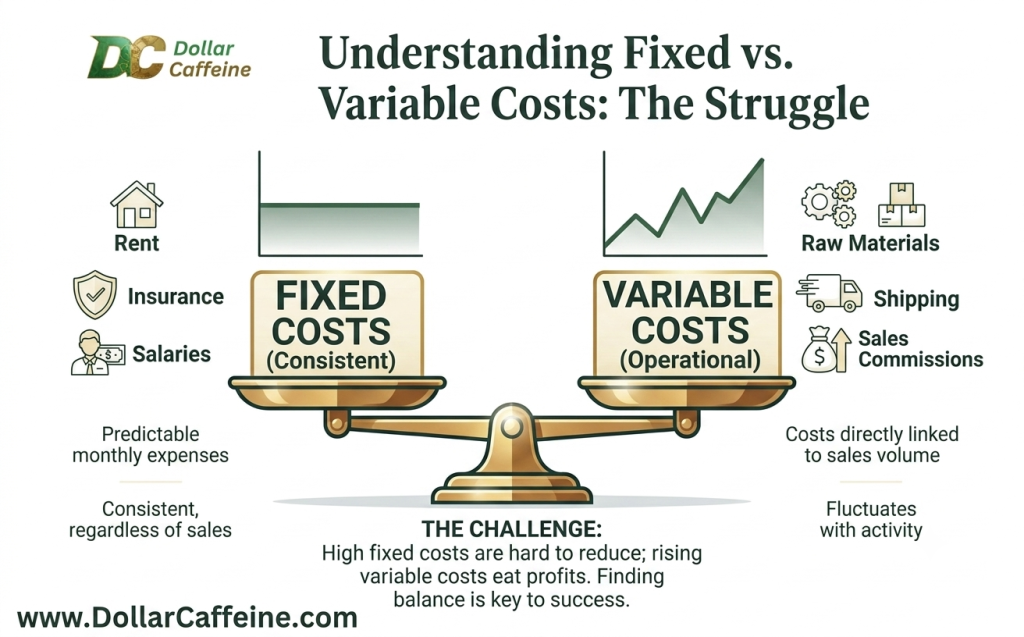
This is where the math gets messy. We need to distinguish between costs we can control and costs we can’t.
1. The “Needs” Trap (Fixed Costs)
These are your non-negotiables: rent, car payments, insurance, and utilities. In the current economy, these costs have become less flexible. You can’t easily tell your landlord you’re only going to pay 30% of your rent because you’re following a budget rule.
If your fixed costs are eating your 50% “needs” bucket alive, the traditional rule provides no exit strategy. You are left with two choices: increase your income or reduce your living standards (like moving to a cheaper area or getting a roommate).
2. The “Wants” vs. “Needs” Gray Area (Variable Costs)
Here is where the 30% “wants” bucket becomes dangerous. Many things we label as “needs” are actually flexible.
- Groceries: Do you need organic artisan bread, or are you just used to buying it?
- Transportation: Do you need a new car payment, or can you keep your current one running longer?
- Subscriptions: Do you actually watch all six streaming services, or are you paying for a library of content you ignore?
The 30% “wants” bucket is the first place to look when the economy tightens. But be careful—cutting this too much can lead to burnout.
How to Adjust the Rule for Your Reality
If the 50/30/20 rule doesn’t fit, don’t throw it out. Adjust it. Here is a more realistic way to view your budget in today’s climate:
1. Build a “Living” Budget
If you find that your needs are 60% of your income, adjust your starting point to 60/20/20. Give yourself permission to be realistic. A budget that reflects your actual life is infinitely better than an ideal budget that you abandon after two weeks. Instead you can check How To Create Monthly Budget On Low Income.
2. Attack the “Big Three”
Instead of worrying about your $5 daily coffee (the classic “Latte Factor”), focus on the costs that actually move the needle: Housing, Transportation, and Food.
- Can you lower your utility bills?
- Can you meal prep to bring your food costs down?
- Is your car insurance rate competitive? If you fix the big items, the small “wants” in your 30% bucket won’t matter as much.
3. Prioritize the 20%
No matter what happens to your 50% needs or your 30% wants, try to protect that 20% savings/debt bucket. Even if you have to lower it to 10% temporarily, keep the habit of automation alive. It’s better to save a little bit consistently than to save 20% for two months and then stop completely.
When to Ignore the Rule Entirely
Sometimes, the rule is just not the right tool for the job.
- You are in a debt crisis: If you are paying 20%+ interest on credit cards, forget the 30% wants bucket. Redirect every spare dollar to the debt. Your primary goal is survival, not balance.
- You are a high earner: If you make a significant income, the 50/30/20 rule becomes obsolete. You likely don’t need 50% of your income for needs. In this case, you should be saving 40% or 50% of your income to reach financial independence faster.
- You are a student: When your income is low and irregular, fixed percentages are impossible. Your focus should be on increasing your earning potential, not slicing up a tiny pie.
Frequently Asked Questions
Does “debt repayment” count as a need or savings?
Generally, minimum debt payments (the amount you must pay to avoid penalties) go into the 50% “needs” bucket. Anything extra you pay to clear the debt faster belongs in the 20% “savings/debt” bucket.
What if I can’t afford to save 20%?
That’s okay. Start with 1% or 2%. The absolute most important part of budgeting isn’t the percentage—it’s the habit of automation. Set up an automatic transfer for an amount that doesn’t hurt, and increase it as your income grows.
Is the “Latte Factor” a myth?
Mostly, yes. While cutting out small expenses can help, it won’t fix a budget if your rent or car payment is way too high. Focus on the major fixed costs first; the small daily choices are just for fine-tuning.
Disclaimer: This article is for educational purposes only and should not be considered personalized financial advice. Investing involves risk, including the potential loss of principal. Always consult with a certified financial planner or tax professional before making major decisions regarding your personal finances.