Have you recently opened your auto or home insurance renewal notice, only to feel your stomach drop? For millions of households in 2026, opening the mail has become an anxiety-inducing experience. You haven’t been in a fender bender. Your home hasn’t suffered a fire or a flood. Your driving record is spotless. Yet, your premium has suddenly jumped by $300, $500, or even $1,000.
If this sounds familiar, you are not alone, and you aren’t doing anything wrong. We are currently living through the “Insurance Bill Shock of 2026.”
To understand why insurance rates are going up in 2026, we need to look beyond our own driveways and backyards. The insurance industry is reacting to a perfect storm of macroeconomic shifts, climate-driven catastrophes, and technological advancements that are reshaping how risk is calculated.
Let’s break down the real causes behind these premium spikes and, more importantly, what actionable steps you can take today to lower your bill.
The Reality of the 2026 Insurance Crisis
For years, insurance was a relatively predictable household expense. Historically, rates increased by a modest 3% to 5% annually. However, the landscape shifted dramatically in the post-pandemic years, and the compounding effects have caught up with consumers in 2026.
Home Insurance Spikes:
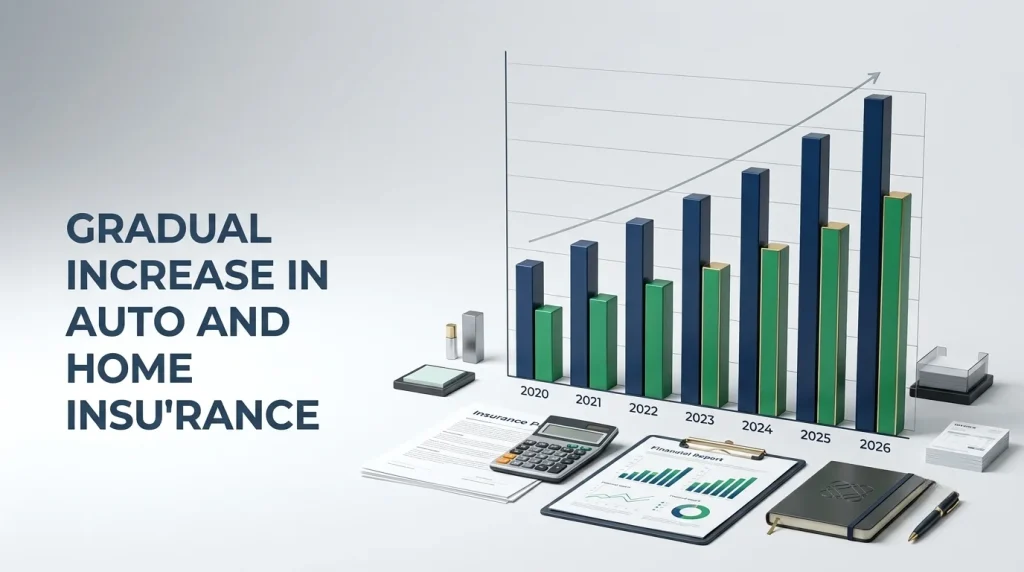
Between 2019 and 2025, national home insurance premiums rose by an astonishing 62%. In some disaster-prone states, premiums have more than doubled. Insurance now accounts for roughly 9% of the typical homeowner’s monthly mortgage payment the highest share ever recorded.
Auto Insurance Surges:
The average annual cost for full coverage auto insurance sits well above $2,100 nationally in 2026. While the pace of rate hikes has slowed compared to the massive 18% jumps seen in 2023 and 2024, the cumulative effect means you are paying significantly more today than you were just three years ago.
Why Are Insurance Rates Going Up in 2026 Without Claims?
When you buy an insurance policy, you aren’t just paying for your own risk—you are paying into a collective pool. When the pool faces massive, widespread losses, everyone’s premiums rise to replenish it. Here are the three main culprits driving the 2026 bill shock.
1. The Climate Crisis and the Reinsurance Squeeze
Every year from 2020 to 2025 ranked among the costliest on record for extreme weather claims. From catastrophic hurricanes in the Gulf Coast to relentless wildfires in the West and unprecedented hail storms in the Midwest, insurance companies have paid out billions in property damages.
To protect themselves from going bankrupt after a massive disaster, insurance companies buy their own insurance, known as reinsurance. As global climate disasters have intensified, reinsurance companies have drastically raised their rates. Between 2019 and 2024, U.S. reinsurance rates increased by over 100%. Those costs are passed directly down to you, the consumer, resulting in higher baseline premiums regardless of your home’s actual claim history.
2. Persistent Inflation in Repair and Replacement Costs
The cars we drive and the homes we live in are substantially more expensive to fix today than they were half a decade ago.
Let’s look at vehicles. The average price of a new car in the U.S. hovers around $49,000. But it’s not just the sticker price; it’s the technology inside the vehicle. A minor fender bender that used to require a simple $500 plastic bumper replacement now involves recalibrating lane-departure sensors, backup cameras, and driver-assist computers. A single damaged sensor can cost up to $3,000 to replace. Furthermore, replacing a battery pack in modern Electric Vehicles (EVs) can run anywhere from $12,000 to $25,000. Insurers are raising rates across the board to account for these hyper-expensive repair costs.
According To Yahoo Finance You can Know about the EV insurance in 2026
3. “Social Inflation” and the Litigation Surge
Another hidden factor driving up your premium is what the industry calls “social inflation.” This refers to the rising costs of insurance claims resulting from increasing litigation, broader definitions of liability, and massive jury awards.
When accident claims go to court, the legal fees and eventual payouts are significantly higher than they were a decade ago. In states with high litigation rates (such as Louisiana and Florida), insurance companies factor the anticipation of lengthy, expensive lawsuits into everyone’s premium calculations.
Auto vs. Home Insurance: Where is the Bill Shock Hitting Hardest?
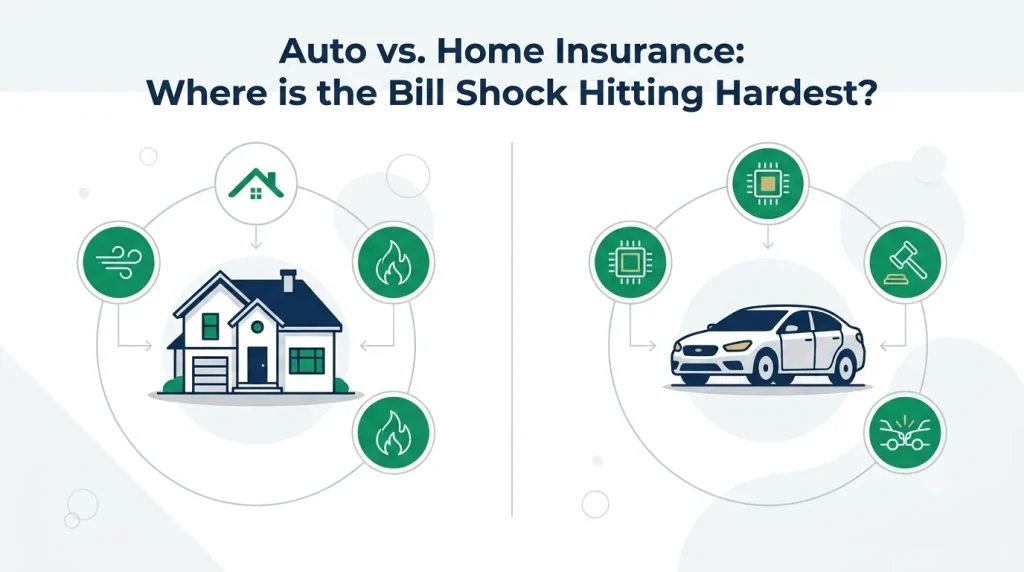
While both sectors are experiencing price hikes, insurers evaluate them differently.
For Homeowners:
Roof age has become the ultimate dealbreaker in 2026. In 2024 alone, U.S. roof claims costs reached nearly $31 billion. Insurers are now utilizing advanced aerial imagery and AI to assess the condition of your roof. The premium gap between homes with newer roofs (under 5 years old) and older roofs (11-15 years old) has widened drastically. Many carriers are enforcing much higher deductibles for wind and hail damage, or refusing to renew policies for older roofs entirely.You can also check our Guide How to Buy Your First Home In High Interest With insurance.
For Drivers:
Location and local demographics are playing a larger role. Insurers rely heavily on ZIP code data. If your city has seen a spike in vehicle thefts, a rise in uninsured drivers, or heavier traffic congestion due to population growth, your auto rate will increase—even if your car stays parked in a garage most of the week.
5 Actionable Ways to Lower Your Insurance Premiums Today
You cannot control global weather patterns or the price of car parts, but you are not powerless against the 2026 premium shock. Here is how you can fight back.
1. Shop the Market Annually
Loyalty to an insurance company no longer pays. Insurers use complex algorithms to predict “price optimization” meaning they will steadily raise rates on customers who are statistically unlikely to leave. Compare quotes from at least three different carriers every single year.
2. Increase Your Deductibles Strategically:
The days of low deductibles are over. In 2025, the average homeowner’s deductible rose by 22%. By voluntarily raising your auto collision deductible from $500 to $1,000, or your home deductible from $1,000 to $2,500, you can instantly slash your monthly premium. Just ensure you have that cash accessible in an emergency fund.
3. Embrace Telematics (Usage-Based Insurance):
If you are a safe driver who works from home or has a short commute, opt into your insurer’s telematics program. By allowing an app to track your mileage, braking, and driving habits, you can secure discounts ranging from 10% to 30%.
4. Bundle Home and Auto:
While this is classic advice, the discounts for bundling have become much more aggressive in 2026 as carriers fight to retain profitable households.
5. Invest in Proactive Risk Mitigation:
For your home, installing an automatic water shut-off valve, a monitored security system, or upgrading your roof to impact-resistant shingles can trigger substantial policy discounts that pay for themselves over time.
Final Thoughts
The insurance bill shock of 2026 is a harsh reality of our modern economy. Between advanced vehicle tech, a volatile climate, and systemic inflation, the era of cheap, static insurance premiums is largely behind us. However, by understanding why insurance rates are going up in 2026, you can shift from feeling helpless to taking control. Review your policies, talk to an independent broker, adjust your deductibles, and make sure you are only paying for the coverage you genuinely need.
Frequently Asked Questions
Q1:Why did my car insurance go up when I haven’t had an accident?
Your rates are influenced by collective data, not just your personal history. Factors like inflation in auto repair costs, the complexity of modern vehicle technology (like sensors and cameras), and increases in uninsured drivers in your ZIP code all force insurers to raise base rates to cover anticipated losses.
Q2:Can my insurance company drop me without warning?
While they must provide notice (usually 30 to 60 days, depending on state laws), insurance companies can choose not to renew your policy. In 2026, this is increasingly common in areas prone to natural disasters or if a home’s roof is deemed too old.
Q3:Is it worth claiming small damages anymore?
Generally, no. With the rise in premiums, filing a claim for minor damage that is only slightly above your deductible can trigger a rate hike that costs you more in the long run. It is often more cost-effective to pay for minor repairs out-of-pocket and save your insurance for catastrophic losses.