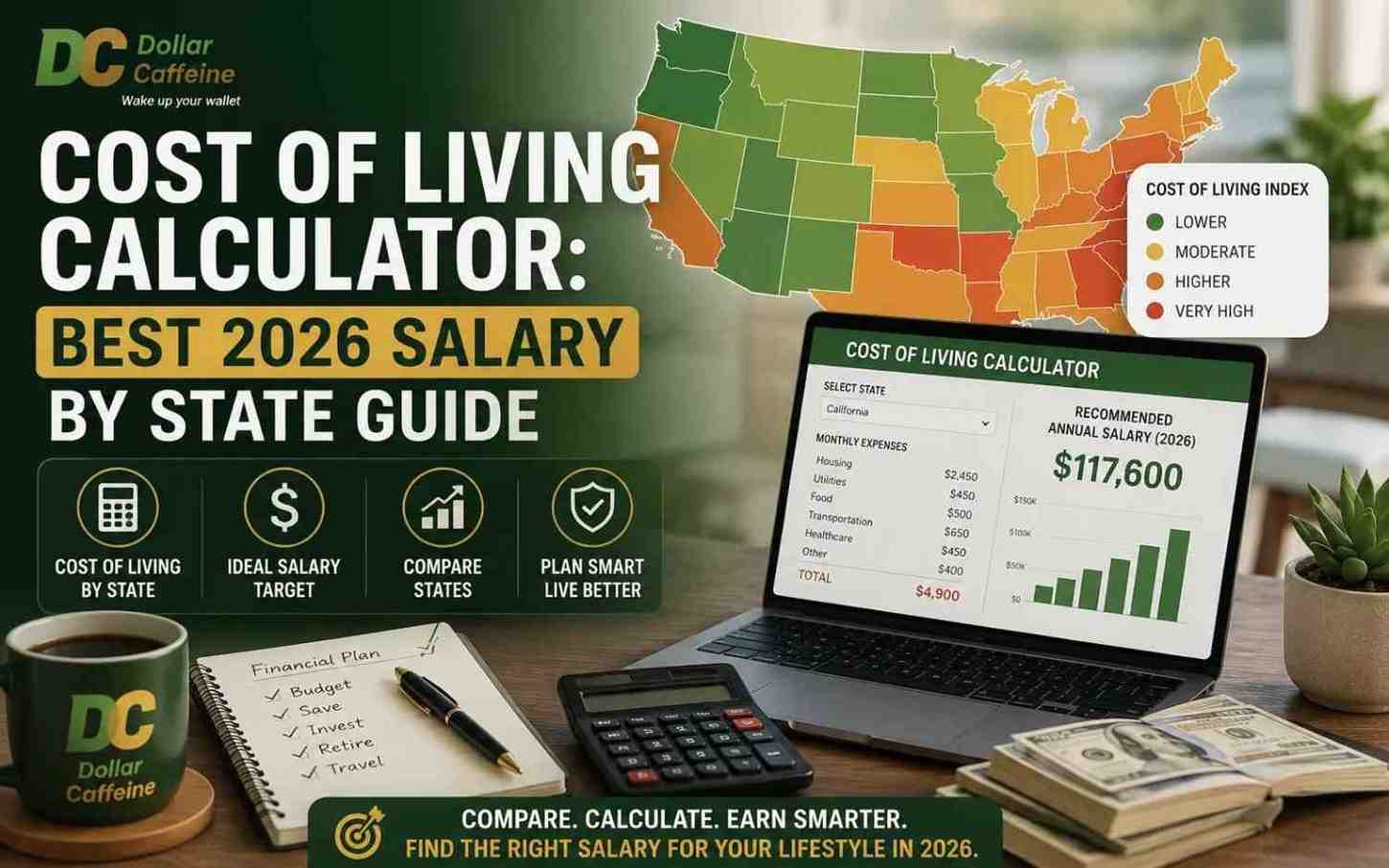
A cost of living calculator gives you the precise insights needed to determine what salary is required to live comfortably across every U.S. state in 2026.
When calculating the salary required for comfortable living in a particular state, it is necessary to consider the cost of living index along with the budgeting rule of 50/30/20 percent. In 2026, the three most expensive states will be Hawaii, California, and Massachusetts, where a comfortable salary should be higher than $100,000. The cheapest states in 2026 will be Mississippi, Arkansas, and West Virginia, where one can have a comfortable life with an income ranging from $60,000 to $70,000.
In order to understand what the American economy looks like in the current moment, you need to look at the cost of living not only at a national average but taking into account the fluctuations in the level of inflation, insurance rates and the continuing shortage of housing. This guide will help you find out the cost of living in all 50 states and understand the economic reality of 2026.
How We Define “Comfortable”: The 50/30/20 Rule in 2026
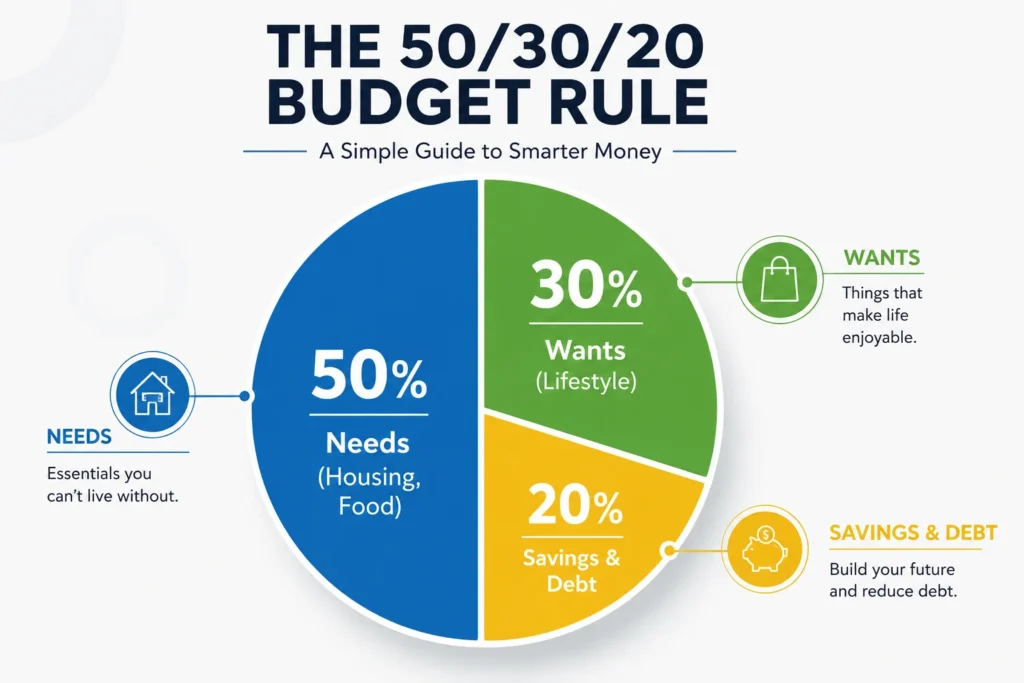
In assessing the accuracy of a cost of living calculator or when looking at the baseline salary information, it is essential that we understand what “comfortable” really entails. It does not involve tracking the bare necessities or the poverty-level wage rates. Instead, we base our calculations on the time-tested 50/30/20 budget:
- 50% of Needs – rent/mortgage, basic food expenses, utilities, insurance, and basic debt.
- 30% of Wants – Lifestyle decisions, going out, entertainment, vacations.
- 20% of Savings & Investments – Emergency fund, savings plan, and investing.
You are clearly not living comfortably if your basic living expenditures amount to 75% of your salary.
The 5 Most Expensive States to Live in 2026
If your goal is to move or secure a raise within one of these coastal or urban centers, earning a six-figure income is not a nice-to-have anymore; it is a bare minimum. According to the Government Average wage index the top five most difficult places financially are:
- Hawaii: Requires a comfortable salary of ~$115,000+. Extreme shipping fees for everyday goods and severe island housing constraints drive this number up.
- Massachusetts: Requires ~$112,000+. Greater Boston’s real estate market and steep utility bills keep expenses exceptionally high.
- California: Requires ~$108,000+. High state income taxes, expensive gas, and exorbitant housing keep California near the absolute peak.
- New York: Requires ~$105,000+. Driven heavily by downstate NYC metro requirements and local municipal taxes.
- Washington: Requires ~$101,000+. The continued tech boom in the Pacific Northwest has permanently elevated baseline expenses.
The 5 Cheapest States to Live in 2026
For those that use their skills in geographic arbitrage to earn a good salary but live in an inexpensive location, the south and Midwest provide fantastic buying power. Searching for the cheapest states to live in usually directs one to these regions:
- Mississippi: Needs ~$58,000. Always ranked as the cheapest state, thanks to its very inexpensive median home prices.
- Arkansas: Needs ~$60,000. Due to low property tax rates and easily accessible land, life is relatively cheap here.
- West Virginia: Needs ~$61,000. Offers affordable scenic living along with some of the cheapest homes.
- Oklahoma: Needs ~$62,000. Provides a stable Midwestern economy with inexpensive housing density.
- Alabama: Needs ~$63,000. Inexpensive in all four major factors, ranging from groceries to utilities.
Gross vs. Net Pay: The “No State Income Tax” Reality Check

For an analysis of the average salary per state, note that gross salary is not the same as the salary after tax.
Those states that have no state income tax – for example, Texas, Florida, Nevada, Washington, and Tennessee – ensure that a bigger portion of your gross salary stays intact. For example, $90,000 gross salary in Texas can give you a bigger amount than a gross salary of $95,000 in Oregon or New York.
Yet, be sure to review the complete picture of all the taxes involved. Those states that do not collect income tax will compensate for it through other means. Check out Gross vs. Net Income Guide to find out the Reality.
Why the Cost of Living Jumped in 2026 (Housing & Insurance Realities)
Legacy financial articles often rely on outdated models that ignore current market conditions. In 2026, the cost of living is heavily influenced by two major macroeconomic pressures:
- Sustained Mortgage Rates: With interest rates stabilizing in the mid-to-high 6% range, the monthly debt service on a typical home purchase requires a much higher household income than it did a few years ago.
- Insurance Spikes: Homeowners insurance premiums have surged in states prone to severe weather (like Florida, California, and parts of the Gulf Coast), adding hundreds of dollars a month to housing expenses that standard cost-of-living metrics historically missed.
Cost of Living by State 2026 (The Complete 50-State Data Table)
The following table outlines the estimated gross salary required for a single adult to live comfortably under the 50/30/20 model across all 50 states.
| State | Estimated Comfortable Salary (Single Adult) | State Tax Environment Note |
| Alabama | $63,000 | Moderate property tax, low income tax |
| Alaska | $88,000 | No state income tax, high energy costs |
| Arizona | $78,000 | Flat income tax rate structure |
| Arkansas | $60,000 | Low cost of housing and goods |
| California | $108,000 | High progressive income tax & gas costs |
| Colorado | $92,000 | Rising housing demand in metro corridors |
| Connecticut | $89,000 | High property and insurance baseline |
| Delaware | $82,000 | No state sales tax, moderate income tax |
| Florida | $85,000 | No state income tax, rising insurance costs |
| Georgia | $73,000 | Balanced suburban and urban costs |
| Hawaii | $115,000 | Highest overall cost of living and shipping |
| Idaho | $76,000 | Rapidly growing housing demand |
| Illinois | $79,000 | High local property taxes |
| Indiana | $66,000 | Stable midwestern affordability |
| Iowa | $65,000 | Low median home prices |
| Kansas | $67,000 | Affordable utilities and groceries |
| Kentucky | $64,000 | Low baseline housing expenses |
| Louisiana | $68,000 | Moderate costs, higher insurance overhead |
| Maine | $84,000 | Elevated heating and housing expenses |
| Maryland | $94,000 | High median incomes tied to DC commuter belt |
| Massachusetts | $112,000 | High tech-driven housing costs |
| Michigan | $69,000 | Balanced manufacturing and rural costs |
| Minnesota | $77,000 | Strong public infrastructure, moderate taxes |
| Mississippi | $58,000 | Lowest overall cost of living in the US |
| Missouri | $67,000 | Stable midwest economy |
| Montana | $79,000 | Inflow of out-of-state buyers driving costs |
| Nebraska | $68,000 | Low unemployment, affordable housing |
| Nevada | $83,000 | No state income tax, tourism-driven economy |
| New Hampshire | $87,000 | No broad earned income tax, high property tax |
| New Jersey | $96,000 | High property taxes and NYC proximity |
| New Mexico | $71,000 | Moderate overall cost of living |
| New York | $105,000 | Skewed heavily by NYC metro area |
| North Carolina | $75,000 | Growing tech and financial hubs |
| North Dakota | $69,000 | Energy-driven local economy |
| Ohio | $67,000 | Low housing costs across major metros |
| Oklahoma | $62,000 | Highly affordable real estate market |
| Oregon | $93,000 | High state income tax, rising housing costs |
| Pennsylvania | $75,000 | Balanced rust-belt and metropolitan costs |
| Rhode Island | $86,000 | New England coastal premium |
| South Carolina | $73,000 | Popular relocation and retirement destination |
| South Dakota | $66,000 | No state income tax, low cost of living |
| Tennessee | $71,000 | No state wage income tax |
| Texas | $76,000 | No state income tax, high property taxes |
| Utah | $82,000 | Growing family demographics, rising housing |
| Vermont | $85,000 | High energy and rural housing costs |
| Virginia | $88,000 | Northern Virginia DC-suburb premium |
| Washington | $101,000 | No state income tax, high tech-sector wages |
| West Virginia | $61,000 | Lowest median home prices in the east |
| Wisconsin | $72,000 | Stable regional cost of living |
| Wyoming | $70,000 | No state income tax, low population density |
[You Can Also Use Our Airbnb Income Calculator To find out the Living Cost]
Practical Actions Following Relocation & Salary Analysis
In case you are using a salary calculator in order to analyze a job offer or plan to relocate across the country, here is what you need to do:
- Perform a Net Pay Audit: Never analyze an offer by the gross compensation. Include state and municipal taxes into your calculation.
- Cap Your Housing Costs: Make sure your housing expenses will not exceed 30% of your gross income.
- Ask for a Geographic Pay Adjustment: In case you are moving to a more expensive area, use your cost of living analysis data.
FAQs
1. What is the average cost of living by state in 2026?
The cost of living can be incredibly variable, as there are states like Hawaii and Massachusetts, where one would need more than $100,000 per year in order to live comfortably, while there are other states like Mississippi and Arkansas, where $60,000 will be enough.
2. What is the function of a cost of living calculator?
It is used to compare the relative price level of basic needs (housing, food, tax, and medical expenses) between two geographically distant locations.
3. What is a living wage?
A living wage is the lowest amount of income one must earn in order to afford basic necessities without needing any external financial help.
4. Is a salary of $100,000 good in 2026?
Although $100,000 is still a good salary, its value has been significantly eroded in expensive cities such as New York and San Francisco because of the exorbitant cost of housing.
5. Which are the most affordable states?
The Midwestern and Southern states such as Mississippi, Kansas, Oklahoma, and Alabama have always ranked as the most affordable states according to housing and utility expenses.
6. What salary can be regarded as middle class in 2026?
Middle class includes all people who earn two-thirds to twice the median income of their respective regions, about $50,000 to $150,000.
7. Is $100k a lot to make in today’s world?
$100k is a significant source of financial stability in lower-cost states such as Texas or Ohio. $100k in big coastal cities means that one is in the middle-class.
8. What does the cost of living index measure?
The index is a compilation of the costs of various consumer goods, grocery prices, utility costs, transport, health care, and housing compared to the national base of 100.