Let me be straight with you. Most “best freelancing platforms” articles are written by people who’ve never actually freelanced. They just repeat the same tired info everyone else regurgitates.
I’ve been freelancing for six years, made money on some platforms, lost time on others. The best platforms for freelancing in the US aren’t always the ones everyone talks about. Some are great for beginners but terrible for scaling. Others pay amazing rates but are nearly impossible to crack.
Here’s what actually works, based on real experience making decent money freelancing.
1. Upwork (The Industry Giant)
Best For: Writers, developers, marketers, virtual assistants
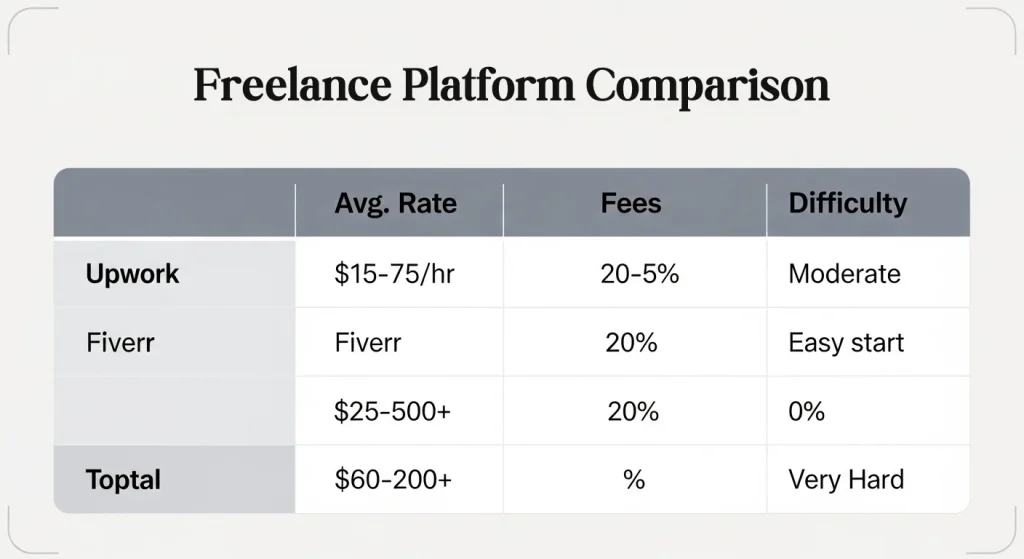
Average Rate: $15-75/hour
Platform Fee: 20% (first $500), 10% (next $9,500), 5% after $10,000
Getting Started: Moderate difficulty
I’ve made over $80,000 on Upwork in four years. Those first months were brutal though. You’ll send 50 proposals and get 2 responses. But once you crack it, the money flows consistently.
What Makes Upwork Work: The algorithm favors freelancers with high job success scores. Your profile needs keyword optimization because clients search for specific skills. Most successful people specialize instead of being generalists.
Success Strategy: Write custom proposals showing you actually read the job post. Include relevant samples. Build long-term client relationships where possible. Gradually raise rates as reviews come in.
I know a copywriter making $6,000/month here, a developer at $8,000/month, several VAs earning $2,000-4,000/month consistently.
2. Fiverr (Beyond $5 Gigs)
Best For: Design, writing, video editing, marketing
Project Rates: $25-500+ per gig
Platform Fee: 20%
Getting Started: Easy setup, hard to get noticed
My designer friend makes $2,500-3,500/month selling logo packages for $200-400. Started at $25 logos two years ago.
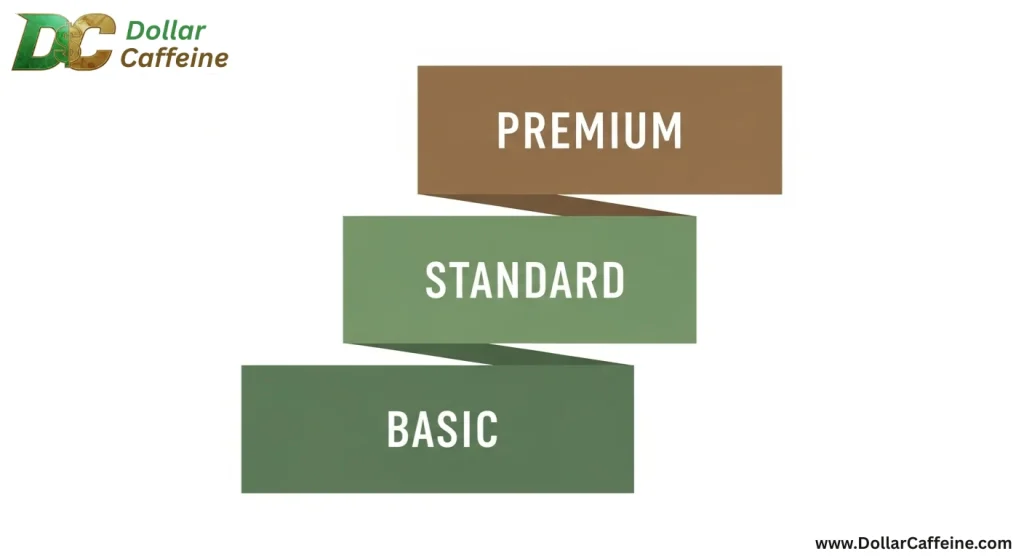
How Fiverr Really Works: You create gigs instead of bidding. Success depends on SEO optimization of titles and descriptions. Create 3-tier packages (Basic/Standard/Premium). Use all available gig slots.
The algorithm loves high conversion rates and fast response times. New sellers get brief visibility boost, then it’s merit-based.
Real Numbers:
- Logo designer: $3,000/month, 150+ orders monthly
- Content writer: $1,800/month, blog posts at $50-75 each
- Video editor: $4,200/month with wedding packages
3. Freelancer.com (Global Marketplace)
Best For: Tech projects, data entry, writing
Average Rate: $10-60/hour
Platform Fee: 10% or 3% with membership
Getting Started: Easy but competitive
Feels like the wild west but has opportunities. Lots of international competition drives prices down, but US freelancers have advantages for English work.
The contest feature is interesting – post work, winner gets paid. Risky time investment but designers regularly win $200-500 contests.
Good for building initial reviews and portfolios. Projects tend to be smaller and less complex than Upwork.
4. Guru (Professional Focus)
Best For: Programming, consulting, marketing, design
Average Rate: $25-100/hour
Platform Fee: 5-9% depending on membership
Getting Started: Moderate difficulty
More professional client base with bigger budgets. Not beginner-friendly. A marketing consultant I know makes $4,000-6,000/month with just 3-4 ongoing Guru clients.
Lower fees than most platforms. Fewer total jobs but higher quality opportunities. Great for business consulting and high-level technical services.
5. Toptal (Elite Network)
Best For: Senior developers, designers, finance experts
Rate Range: $60-200+/hour
Platform Fee: None (clients pay premium)
Getting Started: Extremely difficult screening
Markets as “top 3%” of talent. Brutal screening with multiple interviews, technical tests, real projects. Most people don’t make it.
But if you get in? A React developer I know makes $120/hour with Fortune 500 companies. You need legitimately senior-level skills – not “2 years experience” senior, but “could lead at Google” senior.
6. 99designs (Design Contests)
Best For: Logo design, web design, graphic design
Contest Prizes: $200-1,500+
Platform Fee: Varies by contest
Getting Started: Portfolio dependent
Contest-based work. Clients post briefs, designers submit concepts, winner takes all. Feast or famine income.
Designer buddy won 30% of contests the first year, and made $15,000. More hours than regular client work but helped build the portfolio fast.
Contest Tips: Only enter projects you’re excited about. Research client’s business first. Submit early for feedback. Skip low-budget contests unless building reviews.
7. PeoplePerHour (UK-Based, US Clients)
Best For: Creative services, marketing, writing
Average Rate: $20-75/hour
Platform Fee: 20% (first $350), then decreases
Getting Started: Easy to moderate
Based in the UK but lots of US clients. Rates tend to be higher than average – European clients used to pay fair wages.
Has “Hourlies” feature for fixed-price services plus traditional project bidding. Made $1,200 over six months with minimal effort. Clients are generally professional and pay on time.
8. Contently (Premium Content)
Best For: Experienced writers, content strategists
Rate Range: $50-150+ per article
Platform Fee: None
Getting Started: Application process
Works with major brands like American Express, IBM, Shopify. Not everyone gets accepted – need professional samples and business/tech expertise.
I get 1-2 assignments monthly at $75-100 each. Great supplemental income for quality work. They want writers who understand content marketing, not just grammar.
9. ClearVoice (Content Marketing)
Best For: Writers, editors, content creators
Rate Range: $30-100+ per piece
Platform Fee: None
Getting Started: Application and assessment
Similar to Contently but easier to get into. Matches writers with companies needing regular content. Once matched, you often get ongoing work instead of one-offs.
Made $800/month working 6-8 hours total. Assignments were interesting, clients professional, payments always on time.
10. FlexJobs (Remote Work Board)
Cost: $14.95/month membership
Job Types: Mix of freelance, contract, remote positions
Platform Fee: None (job board model)
Getting Started: Easy once you pay
Not technically freelancing platform – curated remote job board. Every posting is legitimate, no scams.
Monthly fee keeps out casual browsers, less competition per job. Seen content writing at $30-60/hour, VA roles at $18-25/hour, marketing consulting at $40-80/hour.
11. AngelList (Startup Opportunities)
Best For: Developers, marketers, designers
Compensation: Cash plus equity often
Platform Fee: None
Getting Started: Strong portfolio required
Mainly startup jobs but growing freelance section. Projects are more interesting than typical freelance work. Sometimes get equity along with cash payment.
Did marketing work for a fintech startup – $2,000 upfront plus 0.1% equity. Fun working with cutting-edge stuff, though equity’s still worthless.
Good for developers wanting new tech experience, marketers into growth hacking, designers who like startup culture.
12. SimplyHired Freelance
Best For: Various skills, local opportunities
Job Types: Remote and local freelance work
Platform Fee: None
Getting Started: Easy
Aggregates freelance jobs from across the web. Not a direct hiring platform but great for finding opportunities you’d miss otherwise.
Found several good writing clients through jobs posted here. The key is applying quickly – jobs get filled fast since they’re posted multiple places.
Set up email alerts for your skills. Being first to apply makes a huge difference.
People Also Ask
Which freelancing platform pays the most?
Toptal and Contently have the highest rates for qualified freelancers ($60-200/hour). But Upwork and Guru can pay extremely well once you build a reputation. Your skill level matters more than platform choice.
What’s the easiest platform to start on?
Fiverr and Freelancer.com. You can set up profiles and get first gigs within days. Upwork has more opportunities but takes longer to gain traction and build reviews.
How much do platforms charge in fees?
Most charge 10-20% of your earnings. Sucks, but they’re bringing clients you’d never find otherwise. Once you build relationships, many clients move to direct contracts for future work.
Can you make a living freelancing?
Absolutely. Know freelancers making $50,000-150,000+ annually through these platforms. Takes 3-6 months to build real momentum, but totally doable with consistency and good work.
What The Data Shows
Upwork’s 2024 freelancing report shows US freelancer median income of $39,000 annually, with top 10% making $75,000+. Platform diversity is key to higher earnings. Source: Upwork Freelancing Forward
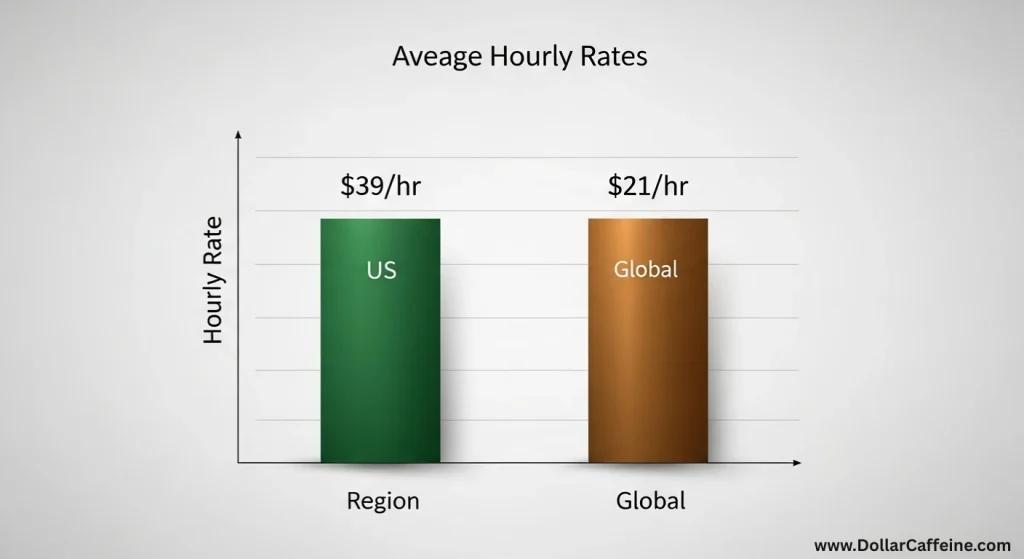
Payoneer’s global freelancer survey found US-based freelancers average $39/hour across all platforms, significantly higher than global average of $21/hour. Source: Payoneer Freelancer Income Report
Freelancers Union study revealed 73% of successful freelancers use multiple platforms rather than relying on just one for all income. Source: Freelancing in America Report
Content Marketing Institute data shows experienced freelance writers can earn $50-150+ per article when working with established content marketing platforms. Source: CMI Freelancer Study
Your Platform Strategy
Week 1: Create profiles on Upwork plus one other that matches your skills (Fiverr for creative work, Guru for business services, FlexJobs for steady opportunities).
Week 2-4: Apply consistently – 5-10 Upwork proposals daily, optimize Fiverr gigs daily. Focus on getting first few reviews even if rates are lower than you want.
Month 2-3: Start raising rates gradually as reviews build. Focus on developing relationships with your best clients for repeat work.
Month 4+: Add third platform or double down on what’s working best. By now you should know which client types and project types are most profitable.
The Key: Don’t spread yourself too thin initially. Master one platform before adding others. Most successful freelancers make 60-80% of income from just 1-2 main platforms.
Bottom Line on Freelancing Platforms

The best platforms for freelancing in the US depend on your specific skills, experience level, and income goals. Beginners should start with Upwork or Fiverr to build experience and reviews. Experienced professionals can target Toptal, Contently, or Guru for premium rates.
What matters most is picking one platform and being consistent. Every successful freelancer started with zero reviews and had to grind through those uncertain first weeks.
Stop researching the “perfect” platform and start building your reputation somewhere. You’ll learn more from actually doing the work than from endless planning and comparison shopping.
Your freelancing income is waiting. Choose a platform from this list, set up your profile properly, and start applying or creating gigs today.
Read more blogs about finance on DollarCaffeine.com