Updated : 28 January 2026
Everyone is telling you to wait for the rates to come down. Meanwhile, you are throwing rent money down the drain every month, watching the price of houses creep up, and wondering if you’ll ever own anything other than ramen noodles and student loans.
The thing about buying your first home in a high interest rate market is that it’s not impossible, it’s just different. I’ve worked with dozens of first-time homebuyers over the past few years to figure this out, even when interest rates were over 7%. Yes, it’s harder than when your parents bought their home at 3% interest. But it’s not always the best decision to sit on the sidelines either. Sometimes you just have to work with what you’ve got.
Why High Rates Aren’t the End of the World
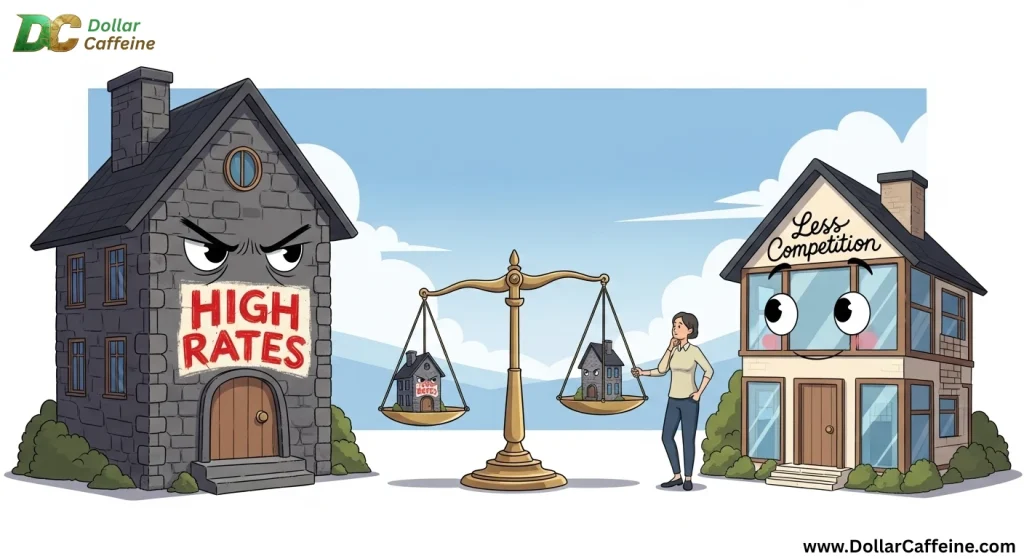
Before you freak out about interest rates, remember this: rates in the 6-7% range are actually normal. Your parents probably paid 8-12% on their first home and thought they were getting a good deal.
The catch? While everyone is terrified of high interest rates, there’s less competition for homes. This means you have more leverage. Sellers are getting choosier about which offers they accept, but they’re also more open to negotiations about price and terms. And hey, you can always refinance later when interest rates come back down. But you can’t go back in time and buy a home at today’s prices if they continue to rise.
Getting Your Money Right
Save More Than You Think You Need :
The old way was 20% down payment. In a high-interest market, having more money in your pocket is like having superpowers. Here’s why:
The more down payment you make, the lower your monthly payments will be. If interest rates are 7% instead of 3%, making a 25% or 30% down payment instead of 20% might just make your payment feasible. It also gives you an edge in your offer. Money talks, especially when sellers are worried about the deal falling apart because of financing problems. To get there faster, cut everything you can for 12-18 months. Yeah, it sucks. But beans and rice are better than paying someone else’s mortgage payment forever.
Get Pre-Approved (Not Pre-Qualified) :
There’s a difference, and it’s important. “Pre-qualified” means you’ve given a lender your income information and they’ve said, “Yeah, you’re probably qualified for something.”
“Pre-approved” means they’ve actually checked your income and your credit and said, “We’ll lend you money.” In a competitive market, sellers won’t even consider your offer unless you have real pre-approval letters. Shop around with at least three lenders. Interest rates can differ by as much as half a percent or more between lenders for the same person.
Consider Different Loan Types :
But everyone thinks they need a traditional 30-year mortgage. Not always. Other choices might be better:
FHA loans require only 3.5% down, but you’ll pay mortgage insurance. It might be a good choice if you’re short on cash.
VA loans (if you qualify) usually have better interest rates and no down payment is needed.
USDA loans for rural areas can be a good deal if you don’t need to put down a payment and interest rates are lower.
Adjustable-rate mortgages (ARMs) are making a comeback. If you’re going to move or refinance in 5-7 years, a 5/1 or 7/1 ARM could save you thousands of dollars in interest.
Smart House Hunting Strategies

Look in Slightly Less Popular Areas :
Everyone wants to live in the hip neighborhood. That’s exactly why you can’t afford it.
Consider looking 10-15 minutes outside of your desired neighborhood. Explore the neighborhoods that are “up and coming” rather than already there. Often, the house three streets over from the hip neighborhood will cost 20% less for the same thing. My friend purchased in a neighborhood that everyone said was “sketchy.” Five years later, it’s full of young families and her house has doubled in value.
Consider Fixer-Uppers (But Be Smart About It) :
Fixer-uppers will sit longer on the market in high-interest rates because fewer people qualify for fixer-upper loans.
But don’t buy someone else’s nightmare. Cosmetic repairs such as paint, flooring, and landscaping are okay. But structural problems, electrical, or plumbing repairs will cost you lunch. Get a real inspection and plan to budget at least 20% more than the contractors estimate. Everything takes longer and costs more than they say.
Look at Different House Types :
Single-family homes with yards cost a lot. Townhouses, condos, and duplexes may be more within your means. Yeah, you’ll have to pay HOA fees or share walls. But it’s ownership nonetheless. You can always move up later when your finances change or interest rates become more favorable.
Negotiation Tactics That Work

Offer Below List Price (But Be Reasonable) :
In hot markets, people were accustomed to bidding over asking price. But high interest rates have cooled that off. Don’t be afraid to make an offer 5-10% below list price, especially if it’s been on the market for a while.
Take a look at how long houses are on the market in your area. If most houses in your area sell in 30 days, but this one has been on the market for 60, the seller is probably getting nervous.
Ask for Rate Buydowns :
Rather than asking the seller to lower the price, ask them to buy down your interest rate. They pay points upfront to lower your rate for the first few years. This will lower your payment significantly and may be more palatable to the seller than a large price reduction.
Request Closing Cost Help :
Sellers can contribute toward your closing costs, which frees up more of your cash for the down payment. Usually capped at 3-6% of the purchase price depending on your loan type.
Be Flexible on Closing Dates :
If sellers need time to find their next house or want to close quickly, accommodate them. Being the easy buyer to work with beats having the highest offer sometimes.
Creative Financing Options
Assumable Mortgages
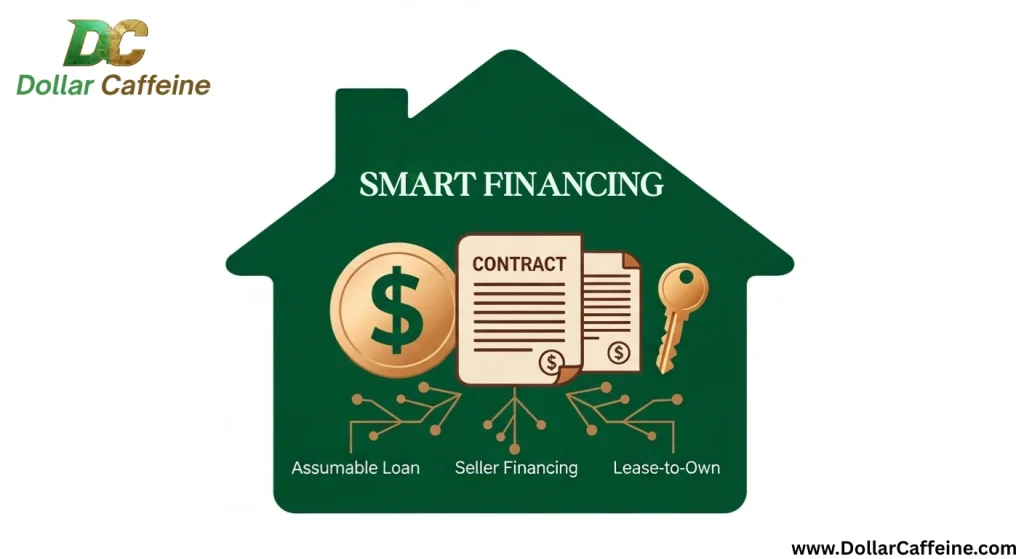
If the seller has a low-rate mortgage from a few years ago, you may be able to assume their loan. Not all loans are assumable, but FHA, VA, and USDA loans are. You would need cash to pay the difference between the loan balance and the purchase price, but you get to keep the low rate.
Seller Financing
Some sellers, especially those who own their home free and clear, may be willing to serve as the bank. You pay them instead of getting a conventional mortgage.Typically works best when the seller doesn’t need all their money right away and wants a steady stream of income. Often provides better terms than banks.
Lease-to-Own Agreements
Rent the house with an option to buy. This is part of the rent that goes toward buying the house. Gives you time to fix your credit or save more money while securing the price at today’s value. Use these with caution – make sure you have a real attorney look at the contract.
Timing Your Purchase

Don’t Try to Time the Market Perfectly
No one knows when the interest rates will fall and when the prices of houses will drop. It is often the case that trying to time the market perfectly means that you will miss out on opportunities. If you have found a house that you like and can afford, and you are going to live in the house for at least 5-7 years, then the timing is not as important as you think.
Consider Seasonal Opportunities
Fewer people look for houses during winter. You may get better offers and fewer buyers from November to February. Also, people who sell their houses during winter have to sell because of genuine reasons (such as job transfer, divorce, and financial problems) and not just to test the waters.
Common First-Time Buyer Mistakes

Looking at Houses You Can’t Afford
Just because you are pre-approved for a $400,000 loan doesn’t mean you need to borrow $400,000. This is probably the highest amount you could qualify for, not necessarily what you could afford. The rule of thumb is to keep your total housing cost (including insurance, taxes, and HOA fees) below 28% of your gross income.
Skipping the Home Inspection
Never, ever opt to skip the inspection to make your offer more attractive. That $500 inspection may save you $50,000 in unexpected repairs. If you are in a multiple offer situation, offer to do the inspection within 5 days instead of the standard 10 days. This shows that you are serious about the property but still protects you.
Not Shopping for Insurance Early
Don’t put off comparing homeowners insurance policies until a week before closing. Premiums can differ dramatically from one insurance company to another, and some insurers may not cover certain types of homes or neighborhoods. Compare premiums early so you can plan your budget accordingly.
Making High Rates Work
Focus on Total Monthly Payment
Yeah, higher rates mean more interest over the life of the loan. But what matters for your budget is the monthly payment you can handle right now.
A $300,000 house at 7% might have the same monthly payment as a $350,000 house at 3%. If the $300,000 house meets your needs, who cares about the rate?
Plan to Refinance Later
When rates drop (and they will eventually), you can refinance. Don’t get hung up on today’s rate if the house and payment work for your situation.
Keep your credit score high and avoid taking on new debt so you’re ready when refinance opportunities appear.
People Also Ask
Should I wait for interest rates to fall before purchasing?
No one knows when rates will fall or how much. If you can afford the payment and intend to keep the home for 5+ years, waiting could end up costing you more in higher home prices than you’ll save from lower rates.
How much should I put down in a high-interest market?
As much as you can afford to save for emergencies. 20% is still a great down payment, but 25-30% will save you a lot on your monthly payment in a high-interest market.
Are ARMs a risky mortgage option in 2025?
Less so than in the past, thanks to regulations. If you’re going to move or refinance within the initial fixed term, ARMs can save you thousands of dollars over 30-year fixed rates.
What is the minimum credit score for a mortgage?
Depends on the loan program. FHA loans can qualify at 580, conventional loans at 620+. However, higher scores qualify you for better interest rates, which is more important when base interest rates are already high.
Real Market Data
According to the National Association of Realtors, first-time buyers made up 32% of all purchases in 2024, down from 50% historically, mainly due to affordability concerns. ( Source: NAR Home Buyers Report )
Freddie Mac data shows the average 30-year mortgage rate peaked at 7.79% in late 2023 but has fluctuated between 6.5-7.5% through 2024.( Source: Freddie Mac Primary Mortgage Market Survey )
A Zillow analysis found that buyers who purchased with rates above 6% in 2023 gained an average of 8% equity within 12 months due to continued price appreciation. ( Source: Zillow Market Research )
The Mortgage Bankers Association reports that adjustable-rate mortgages now account for 12% of applications, up from 3% when rates were at historic lows (. Source: MBA Weekly Application Survey )
Your Action Plan
This month: Get your credit report and fix any errors. Start tracking every dollar you spend to see where you can cut back and save more.
Next month: Get pre-approved with at least three different lenders. Start seriously looking at neighborhoods and house types in your budget.
Following months: Look at houses consistently, make offers on ones you like, and be ready to move fast when you find the right one.
Key point: Don’t overthink it. Perfect timing doesn’t exist, but good houses at prices you can afford do.
The Real Truth About High-Rate Markets

Purchasing your first home in a high-interest rate environment is not the most desirable situation, but it is certainly not impossible either. You simply have to be more resourceful when it comes to financing, more creative in your offer, and more realistic about what you can afford. The people who are succeeding in the current market are not the ones who have everything perfectly timed and an unlimited budget. They are the ones who have done their research, saved as much as possible, and were prepared to pounce when the right opportunity came along. Enough is enough. Stop waiting for the perfect market and start working with the market you have. Your rent payments are not going to get any cheaper, and the price of houses is probably not going to fall either. Take a few tips from this guide and start applying them this week. In a year, you could be complaining about homeowners insurance and property taxes instead of throwing money at a landlord.
That is a pretty good trade-off.
Read more blog about finance on DollarCaffeine.com