$10,000 in credit card debt feels like a mountain, doesn’t it?
I remember staring at my statements, adding up the balances, and feeling sick. The minimum payments weren’t even covering the interest. I felt trapped.
But here’s what I learned: how to pay off $10,000 in credit card debt in one year isn’t magic. It’s math plus discipline. And if I could do it while working a crappy retail job, you probably can too.
You need to pay around $900 every month to knock out $10,000 in debt by next year. Most people only pay about $200 in minimums. So you need an extra $700 from somewhere..
The Brutal Math You Need to Face
Let’s start with reality. If you have $10,000 in credit card debt at 22% interest (average rate), making minimum payments means:
You’ll pay about $200 monthly in minimums. You’ll pay it off in… never. The interest keeps it growing faster than your payments shrink it.
To get rid of $10,000 in credit card debt in a year, you’ll need to pay around $900 each month.That’s a good chunk more than the usual minimum payment.
That extra $700 has to come from somewhere. Either you make more money, spend less money, or both.
There’s no way around this math. Apps and tricks can help, but you need an extra $700 monthly for this to work.
My Story: From $12,000 to Zero
Three years ago, I had $12,347 in credit card debt across four cards. I was paying $240 in minimums and getting nowhere.
I tried balance transfer cards. I tried debt consolidation. Nothing worked because I kept using the cards.
Finally, I got desperate enough to try something drastic. I cut up every card except one (for emergencies only). I moved back home for eight months. I worked a second job on weekends.
It sucked. I had no social life. I ate a lot of ramen. But I paid off every penny in 11 months.
Here’s exactly how I did it.
Step 1: Stop the Bleeding (Cut Up Your Cards)
It’s pretty tough to pay off credit card debt if you’re still using your cards. It’s like your are trying to drain a bathtub with the water still running .
You might be thinking, ‘What about an emergency?
honestly, if you’re already in $10,000 of credit card debt, you’re already in the middle of an emergency. Adding more debt won’t fix anything.
What to do:
- Keep one card for absolute emergencies
- Put it somewhere hard to reach (freeze it in ice, give it to a trusted friend)
- Cut up all other cards
- Remove saved card info from online stores
- Delete shopping apps from your phone
This feels scary. Do it anyway.
Step 2: List Every Single Debt
Get all your credit card statements. Write down:
- Card name
- Current balance
- Interest rate
- Minimum payment
Don’t guess. Get the exact numbers. Log into each account or call the companies.
Here’s what mine looked like:
Card 1: $4,200 at 24.9% – $105 minimum Card 2: $3,100 at 19.9% – $78 minimum
Card 3: $2,800 at 22.4% – $70 minimum Card 4: $2,247 at 26.9% – $67 minimum
Total: $12,347 with $320 in minimums.
While your exact figures will change, you can follow the same steps
Step 3: Choose Your Attack Strategy
There are two main ways to tackle multiple debts:
Debt Avalanche: Pay minimums on everything, attack highest interest rate first.
Debt Snowball: Pay minimums on everything, attack smallest balance first.
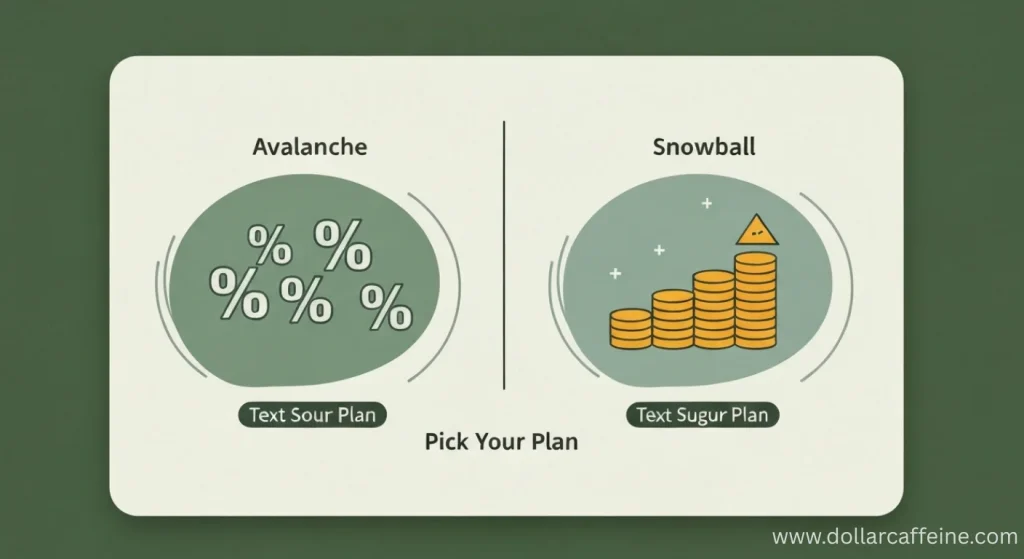
The avalanche saves more money mathematically. The snowball gives you psychological wins faster.
I used the avalanche because I’m stubborn and wanted to save every penny on interest. But if you need motivation, snowball works better.
My recommendation: If your highest interest debt is also one of your smaller balances, start there. If your highest interest debt is huge, go with snowball for the motivation.
Step 4: Find That Extra $700 Monthly
This is where it gets real. You need $700 more than you’re paying now.
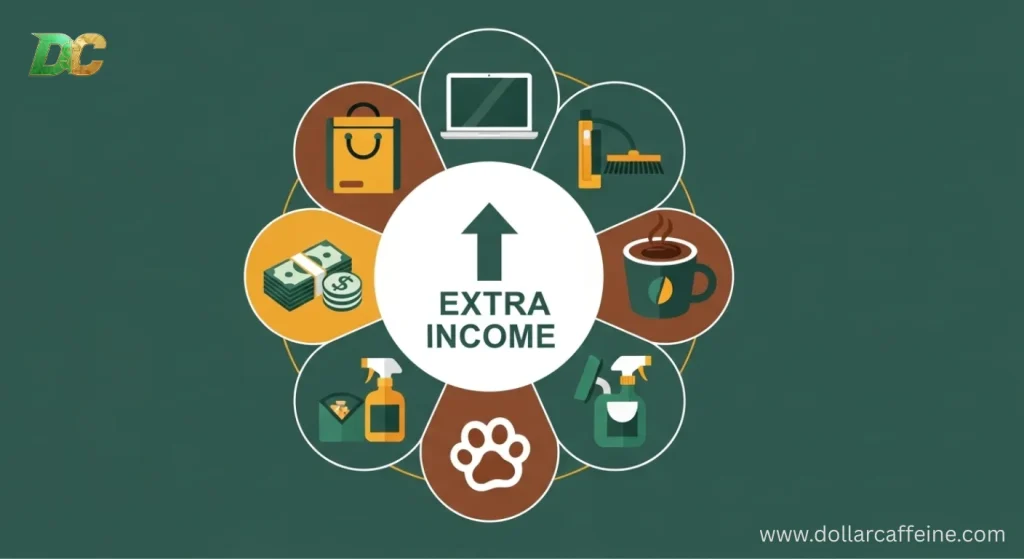
Income side:
- Second job or side hustle
- Sell everything you don’t need
- Work overtime if it’s available
- Freelance work
- Temporary seasonal work
Expense side:
- Move in with family temporarily
- Get a roommate
- Cancel everything non-essential
- Shop at food banks if you qualify
- Use public transportation instead of a car payment
My breakdown:
- Weekend job: +$400/month
- Moved back home: -$650/month in rent
- Cancelled everything: -$120/month
- Sold my guitar and gaming system: +$800 one-time
Total: $830 extra monthly, plus the one-time $800.
Step 5: The Debt Destruction Plan
Here’s exactly how to structure your payments:
Month 1:
- Pay all minimums on time
- Put any extra money toward your target debt
- Track every penny you spend
Months 2-6:
- Keep attacking the target debt
- When you pay off the first card, take that minimum payment and add it to the next card
- Resist the urge to celebrate by spending money
Months 7-12:
- You should have momentum now
- Payments get bigger as you eliminate cards
- Stay focused even when it feels like forever
Example payment progression: Month 1: $900 total payments Month 4: $1,000+ (as first card gets paid off) Month 8: $1,100+ (as second card disappears) Month 12: Everything goes to the last card
Expense Cutting That Actually Matters
Big wins:
- Moving back home saved me $650/month
- Cancelling gym membership saved $45/month
- Cooking instead of eating out saved $300+/month
- Switching to a cheaper phone plan saved $40/month
Small wins that add up:
- Making coffee at home: $50/month
- Generic groceries: $30/month
- Library instead of buying books: $15/month
- Walking instead of Uber: $25/month
Cuts that weren’t worth it:
- Buying the cheapest possible food (got sick, missed work)
- Not maintaining my car (costly repairs later)
- Cancelling insurance (risky and often illegal)
Staying Motivated for 12 Months
A year feels like forever when you’re sacrificing everything fun.
What kept me going:
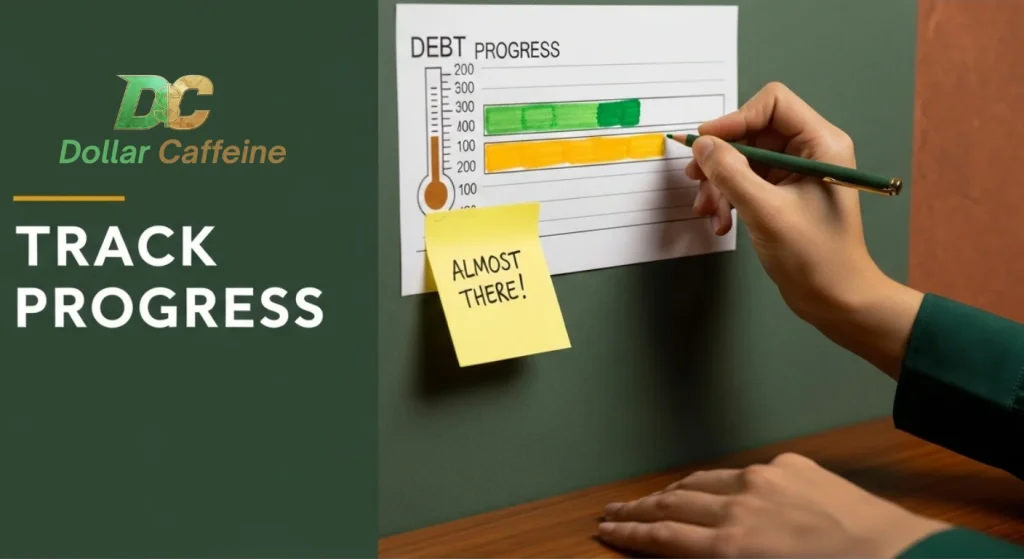
Visual progress tracking: I tracked my progress visually by putting a chart on my wall for each card. Watching those numbers shrink was so motivating—it became a bit of a game for me. And I made sure to celebrate my wins .
Celebrating milestones:When I paid off the first card, I treated myself to a nice $20 dinner. It was a small thing, but it really felt like a big deal.”
Accountability partner: My sister checked in weekly. Having someone know my progress helped.
Focusing on freedom: I often thought about how good it would feel to not have those payments anymore. That vision really helped me get through the hard days.
Avoiding debt-shaming content: I stopped reading about people who paid off debt faster or had it easier. Comparison kills motivation.
Advanced Strategies
Once you have the basics down, these tactics can speed things up:
Balance transfers: If you qualify, moving high-interest debt to 0% cards can save hundreds. But only if you don’t run up the old cards again.
Debt consolidation loans: Personal loans at 10-15% interest beat credit cards at 22%+. Shop around for the best rates.
Credit card company negotiations: Call and ask for lower interest rates. About 30% of people who ask get some reduction.
Tax refund strategy: Use your entire refund for debt. That could be $2,000-4,000 toward your goal.
Found money: Bonuses, gifts, side hustle windfalls. Every extra dollar goes to debt until it’s gone.
People Also Ask
Is it realistic to pay off $10,000 in credit card debt in one year?
Yes, but you’d have to pay around $900 a month, not just the minimum. To do that, you’ll either need to find a way to earn more or seriously cut back on what you’re spending. It won’t be easy, but you can absolutely do it..
What’s the fastest way to pay off credit card debt?
First, stop using the cards. Then, pay more than the minimums. You can either tackle the card with the highest interest rate first (the avalanche method) or the one with the smallest balance (the snowball method). Getting a side gig to make extra money can also speed up the whole process a lot.”
Should I use savings to pay off credit card debt?
Yep, that’s usually the case, especially if you have savings in a low-interest account while your credit cards are charging you high interest. The best move is to keep about $1,000 for emergencies and throw the rest at your debt. You’ll save more money on interest than you’d make in savings anyway.
Can I negotiate with credit card companies?
Yes. You should call and ask for a lower interest rate, a payment plan, or even a settlement offer if you’re having a really hard time. Around 30% of people who ask actually get some kind of help
What if I can’t afford the payments to pay it off in one year?
Extend your timeline. Paying off $10,000 in two years still beats minimum payments forever. The key is having a plan and sticking to it consistently.
Tools and Resources That Help
Debt payoff calculators:
- Bankrate’s calculator shows exactly how much to pay monthly
- NerdWallet’s tool compares avalanche vs snowball methods
- Most budgeting apps have built-in debt tracking
Budgeting apps for tracking:
- Mint (free, tracks everything automatically)
- YNAB (paid, but excellent for debt focus)
- Personal Capital (free, good overview)
Motivation tools:
- Debt thermometer printouts
- Progress photos of your statements
- Debt-free community forums online
To study more about finance visit Dollar Caffeine