Look, I get it. You’re probably reading this because money’s tight. Maybe you’re living paycheck to paycheck. Maybe you’ve tried budgeting before and it didn’t work.
I’ve been there too.
When I was making $9 an hour and barely scraping by, everyone kept telling me to “just budget better.” Easy for them to say, right?
But here’s the thing – creating a monthly budget on a low income isn’t impossible. It’s just different. You can’t follow the same advice that works for people making six figures.
I’m going to share what actually worked for me and thousands of others who started with almost nothing.
Why Most Budget Advice Sucks When You’re Broke
Most financial experts have never been truly broke. They tell you to save 20% of your income when you can barely afford groceries.
That’s garbage advice.
When you’re on a low income, budgeting isn’t about optimization. It’s about survival first, then slowly building up.
The good news? You don’t need fancy software or complicated systems. You just need to know where your money goes and make some tough choices.
Step 1: Find Out Where Your Money Really Goes
This part sucks, but you have to do it.
For two weeks, write down everything you spend. And I mean everything. That $1.50 for a soda. The $5 you gave for gas to your friend . Everything.
Don’t use any app if you don’t want to. A notebook works fine. So does your phone’s notes app.
Here’s what you’re looking for:
- Stuff you forgot you were paying for
- Small purchases that add up
- Money that just seems to disappear
I found out I was spending $80 a month on energy drinks. Had no idea until I tracked it. ( Free Budgeting Template )
Your “money leaks” might be different. Maybe it’s coffee. Maybe it’s those $3 scratch-off tickets. Maybe it’s late fees because you forgot to pay a bill.
Find them. They’re killing your budget.
Step 2: Figure Out What You Actually Make
Not what your paycheck says. What actually hits your account.
If you work hourly, this gets tricky because your hours probably change. Look at your last three months. Use the worst month as your baseline.
Why the worst month? Because you want to budget for reality, not best-case scenarios.
Let’s say some months you make $1,800 and some months you make $1,400. Budget for $1,400. When you make more, that’s bonus money for emergencies or paying off debt.
Don’t forget about:
- Side gigs
- Cash tips
- Money from selling stuff
- Help from family
Add it all up. That’s your real income.
Step 3: Pay the Big Stuff First
This isn’t rocket science. You need a roof over your head and food to eat.
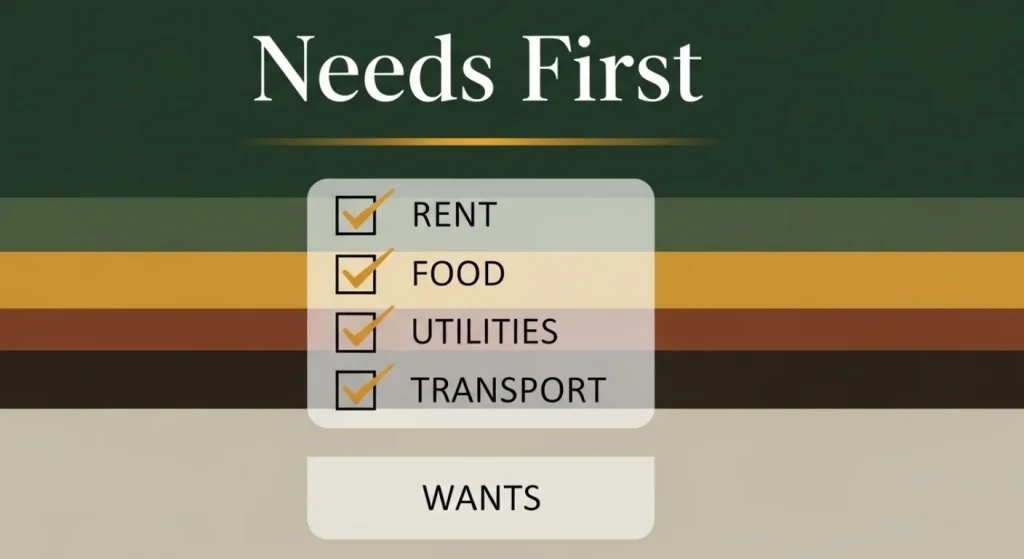
Write down your non-negotiable expenses:
- Rent or mortgage
- Utilities (the ones they’ll shut off)
- Phone (you need this for work)
- Transportation to work
- Minimum debt payments
Add these up. Subtract from your income. What’s left is what you have for everything else.
If there’s nothing left or you’re in the negative, you have a crisis. You need more income or lower expenses. There’s no way around it.
Step 4: Make Food Work on Less Money
Food is usually where you have the most control.
I’m not going to tell you to eat rice and beans every day. That’s miserable and you won’t stick to it.
But here’s what actually works:
Shop the sales. Plan your meals around what’s cheap that week. Chicken thighs instead of breasts. Ground turkey when it’s on sale instead of ground beef.
Cook more than you eat. Make a big pot of chili or soup. Eat it for three days. You’ll get sick of it, but it’s cheap.
Stop buying convenience foods. That $4 frozen dinner? You can make the same thing for $1 with a little prep time.
Generic everything. Store brand cereal tastes the same. Store brand medicine has the same ingredients. Save the money.
Use the food bank if you need to. There’s no shame in it. That’s what it’s there for.
Step 5: Cut the Stuff You Don’t Really Need
This is the hard part. You have to be honest about wants vs. needs.
That Netflix subscription? It’s $15 a month. That’s $180 a year. Maybe you can’t afford it right now.
Your phone plan? Do you really need unlimited everything? Look at cheaper carriers.
Eating out? I know cooking is a pain, but restaurant money adds up fast.
Subscriptions you forgot about? Check your bank statement. Cancel what you don’t use.
Here’s the thing – cutting expenses sucks. You’re already not living large. Having to cut back more feels unfair.
It is unfair. But it’s also reality.
The goal isn’t to live like this forever. It’s to get stable enough that you have choices again.
Step 6: Save Something, Even if It’s Tiny
Everyone says you can’t save on a low income. That’s wrong.
You might not be able to save much, but you can save something.
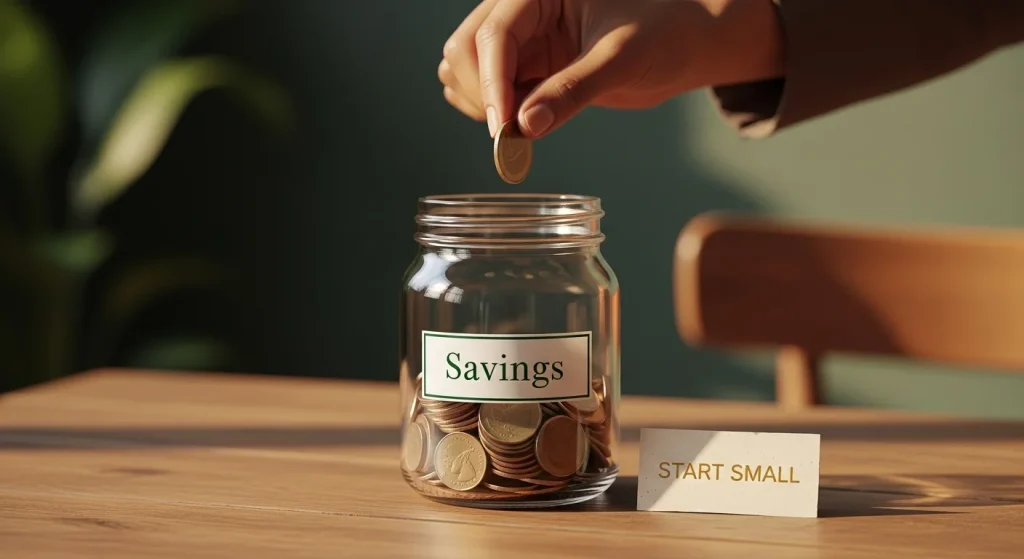
Start with $1 a day. Put it in a jar. That’s $30 a month, $365 a year.
“But I need that dollar!” you might say.
Maybe. But you also need an emergency fund so you don’t have to put car repairs on a credit card.
Once $1 a day feels normal, try $2. Then $5.
I started by saving my loose change. Sounds stupid, but I saved $200 in a year just from pocket change.
Find what works for you:
- Automatic transfer of $25 a month
- Saving your tax refund
- Keeping cash tips separate
- Selling stuff you don’t need
The amount doesn’t matter at first. The habit does.
Step 7: Deal with Debt Without Making It Worse
If you have debt, you have two choices: ignore it or attack it.
Ignoring it doesn’t make it go away. It makes it bigger.
You can’t avalanche or snowball your way out if you don’t have extra money. So what do you do?
Call your creditors. Tell them you’re struggling. Ask for a payment plan. Many will work with you if you’re honest.
Stop using credit cards. Cut them up if you have to. You can’t get out of debt while creating more debt.
Pay minimums until you have an emergency fund. I know this goes against standard advice. But if you put every spare dollar toward debt and then have an emergency, you’ll just create more debt.
Use windfalls for debt. Tax refunds, birthday money, overtime pay. Don’t let lifestyle inflation eat it up.
How to Actually Stick to Your Budget
Most budgets fail because they’re too restrictive or too complicated.
Here’s what works:
Use cash for problem areas. If you overspend on food, take out grocery money in cash. When it’s gone, you’re done shopping.
Check in weekly. Don’t wait until the end of the month to see how you’re doing.
Build in some fun money. Even if it’s just $20 a month. You need something to look forward to.
Expect to mess up. You will. Don’t throw out the whole budget because you had one bad week.
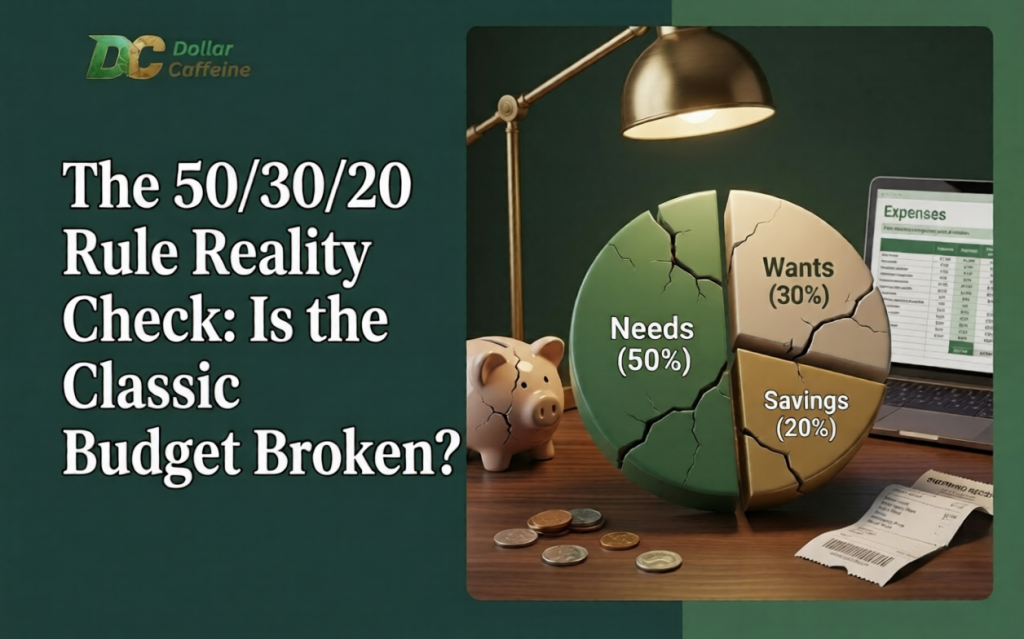
Keep it simple. You don’t need 47 categories. Start with needs, wants, and savings. Add more detail if you want to later.
Tools That Don’t Cost Money :
You don’t need expensive software to budget.
Free apps:
- Mint (connects to your bank)
- Personal Capital (good for tracking everything)
- Your bank’s app (most have basic budgeting tools)
Old school methods:
- Notebook and pen
- Excel or Google Sheets
- Envelope method with actual envelopes
Pick what you’ll actually use. The best budget tool is the one you use consistently.
Making More Money (Because Sometimes That’s the Only Answer)
Sometimes your expenses are as low as they can go. Then you need more income.
Side hustles that don’t require much:
- Food delivery (if you have a car)
- Selling stuff online
- Cleaning houses
- Pet sitting
- Odd jobs from Craigslist
Skills that pay better:
- Customer service (many jobs remote now)
- Basic computer skills
- Any certification in healthcare
- Trade skills
Free ways to learn:
- YouTube University
- Library classes
- Community college workforce programs
- Online courses with financial aid
The key is picking something you can actually do with your current schedule and transportation.
People Also Ask :
What if my income changes every month?
Use your worst month as your budget baseline. When you make more, put the extra toward savings or debt. Don’t increase your spending just because you had a good month.
How do I budget when I’m living paycheck to paycheck?
Focus on timing your bills with your paychecks. Pay rent and utilities right after you get paid. Budget the rest weekly instead of monthly. Save any leftover money immediately before you spend it.
Should I save money or pay off debt first?
Save $500-1000 first for emergencies. Then attack debt. Without any emergency fund, you’ll just create new debt when something breaks or goes wrong.
Can I really budget on minimum wage?
Yes, but it’s hard. You might need roommates, food assistance, or a second income source. The budget helps you see exactly what your options are.
What if I can’t afford all my bills?
Make a list of what happens if you don’t pay each bill. Rent and utilities get shut off fast. Credit cards and medical bills take longer to cause serious problems. Pay survival bills first.
Real Stories from Real People
Jamie’s story: Made $22,000 a year as a cashier. Started with saving quarters in a jar. Built up $800 emergency fund over two years. When her car broke down, she could fix it instead of taking a payday loan.
Mike’s experience: Single dad making $15/hour. Used envelope method for groceries and gas. Stopped overdrafting his account, saving $35/month in fees. Used that money to build savings.
Lisa’s journey: Part-time worker with irregular hours. Budgeted for her lowest-earning month. Put all “extra” money from good months into savings. Had three months of expenses saved when COVID hit.
These aren’t get-rich-quick stories. They’re about getting stable and having options.
Read more about finance on Dollar Caffeine